

Interoceanic Train derails in Oaxaca; They investigate the causes of the accident
Mexico's Interoceanic Train suffered a derailment in Oaxaca. The Navy confirmed that there were no injuries and is already investigating the incident
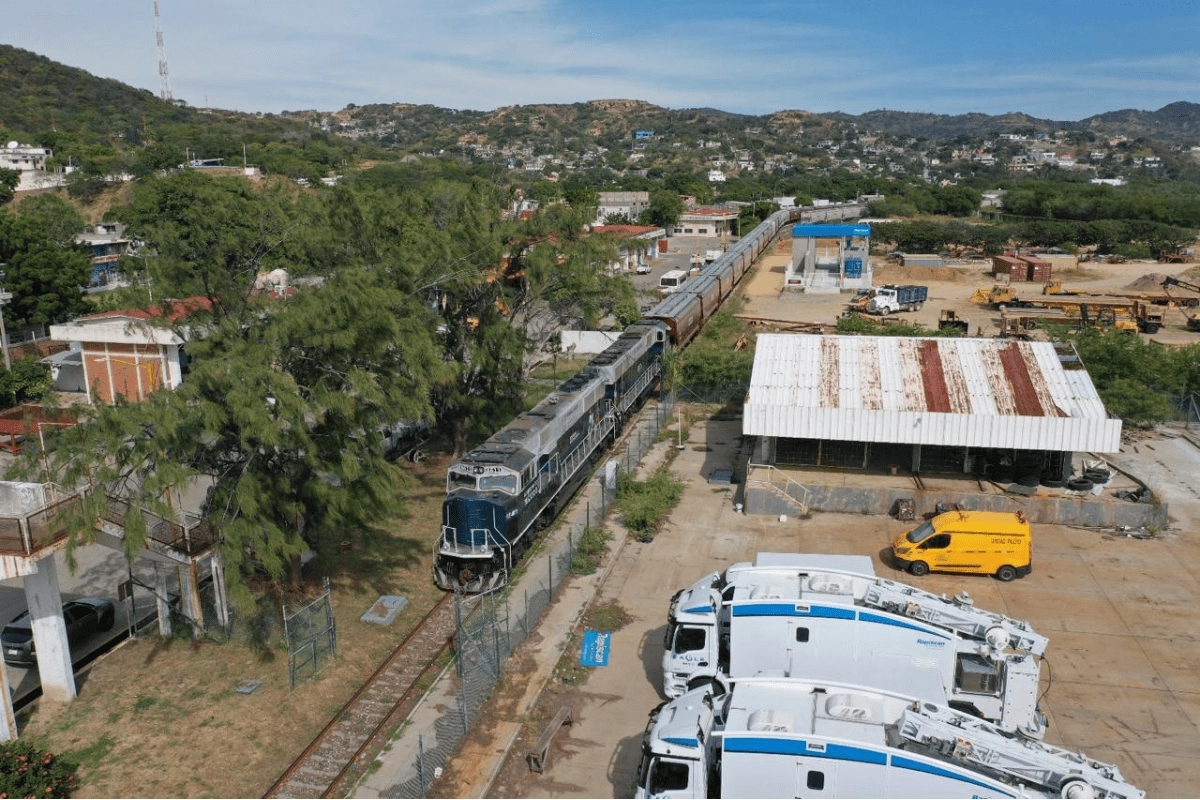

The Interoceanic Freight Train registered a new derailment in Oaxaca in a section of Line Z, near the municipality of Asunción Ixtaltepec, reported the Secretary of the Navy (Semar), responsible for the operation of the Interoceanic Corridor of the Isthmus of Tehuantepec (CIIT).
According to the official report, the accident occurred at kilometer 230 800, where two articulated units of a cargo convoy, made up of two cars each, suffered damage for reasons that are still the subject of investigation.
The authorities stated that there were no injuries or effects on the population, so emergency protocols were immediately activated to remove the locomotive and the damaged carriages and free the railway line.
Charging operation continues normally
After the maneuvers carried out by specialized personnel, Semar confirmed that the cargo service of the Interoceanic Train did not suffer major interruptions.
Likewise, he reported that specialists from the Tehuantepec Isthmus Railway are carrying out a technical review to determine what caused the derailment.
While the investigations conclude, freight rail operations continue to operate as usual.
The accident occurred on a stretch with tragic history
The new incident attracted attention because it occurred practically in the same sector where the derailment of the Isthmus passenger train was recorded, an accident that left 14 people dead and 98 injured, becoming one of the most serious events in the recent history of the railway project.
As a result of this mishap, the passenger service of the Interoceanic Train remains suspended and only operations for the transportation of goods continue.
The investigation into the previous accident has already been closed.
On April 22, a judge concluded the criminal process related to the derailment that occurred previously and ordered the immediate release of two of the three workers who remained subject to proceedings.
The resolution was possible after relatives of the victims and the state company Ferrocarril del Istmo de Tehuantepec reached agreements to repair the damage.
Days before, the Attorney General's Office (FGR) reported that 145 victims, including 114 adults and 31 minors, accepted said reparation agreements.
The FGR attributed the accident to excessive speed
In its final report, the Prosecutor's Office concluded that the accident of the passenger train was a consequence of excessive speed and the negligence of the crew, for which it held the engineer, the conductor and the head of dispatch criminally responsible.
The agency also ruled out that there were flaws in the railway infrastructure, stating that the track, sleepers, fixings and ballast met the required technical specifications.
Therefore, it determined that there were no elements to bring criminal action against the Secretary of the Navy for the construction or operation of the work.
Specialists questioned the design of the route
Although the official investigation concluded that the human factor was the main cause of the accident, various groups of engineers and rail transport specialists pointed out that the layout of Line Z has characteristics that may not be the most suitable for the circulation of passenger trains, which is why they recommended making modifications before resuming service.
Passenger service will remain suspended until 2027
Currently, the Interoceanic Train only operates with cargo convoys.
Last June, President Claudia Sheinbaum confirmed that passenger service will not operate again until early 2027, once the technical adjustments and route changes recommended after the accident are completed.
The president explained that the modifications are analyzed together with the Rail Transport Regulatory Agency, headed by Andrés Lajous, and assured that the recommendations will be presented publicly before the reactivation of the service.
A strategic project for international trade
The Interoceanic Corridor of the Isthmus of Tehuantepec is one of the most important infrastructure projects promoted by the federal government to connect the Pacific and Atlantic oceans through a rail and port network in the south-southeast of Mexico.
The initiative seeks to strengthen the transportation of goods and become a logistics alternative to the Panama Canal. However, the accidents recorded on Line Z have represented one of the main challenges for the consolidation of the project, especially with regard to passenger service, whose reactivation will depend on the safety adjustments that are currently under development.