

Recommendations to face the heat wave in southern California
Extreme temperatures extend into Sunday night
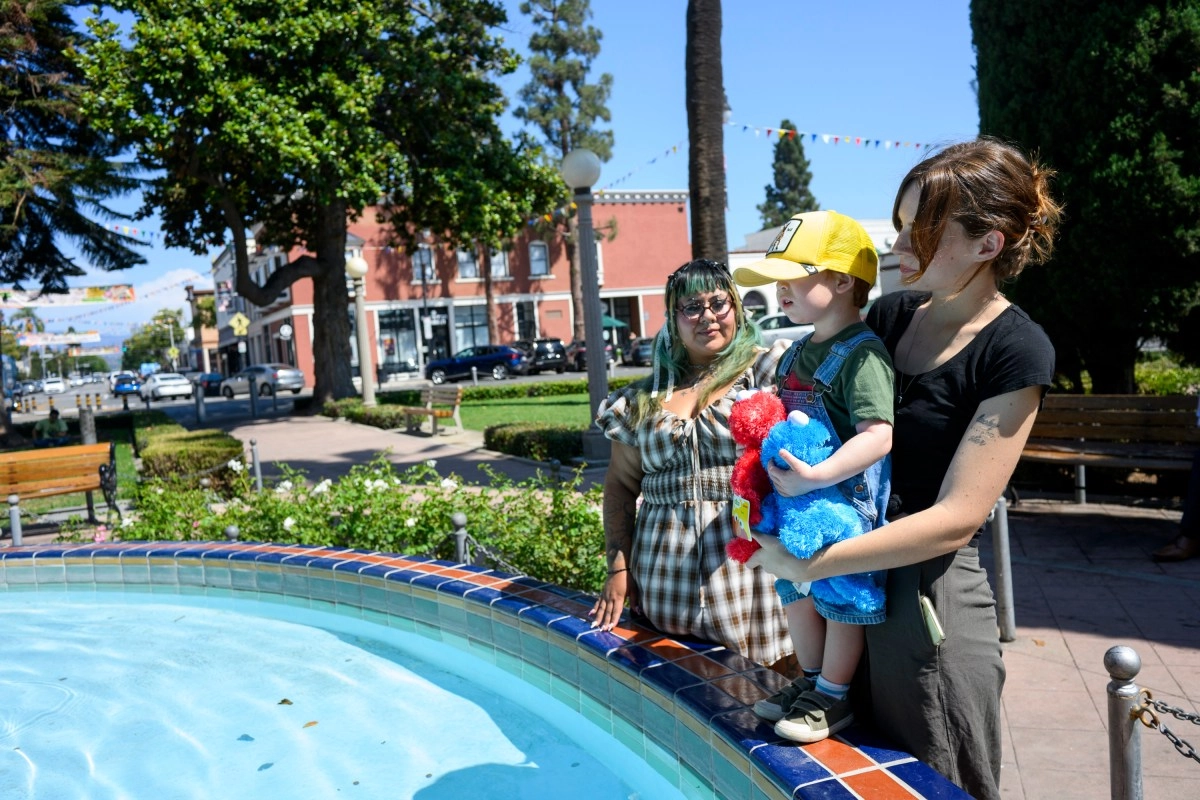

During the heat wave hitting southern California, Vanessa Asuncion prefers to be outside her Fullerton home to combat the high temperatures since she only has a wall-mounted air conditioning unit and fans instead of a centralized cooling system.
“I’m one of those people who doesn’t like the heat, so I’m looking forward to it passing soon. Plus, I live in a place without air conditioning, so it’s brutal,” said Asuncion. “So I try to get out of the house when I can and use the air conditioning in my car or go for a walk.”
However, the young Latina shared that when she uses her apartment’s air conditioning unit, her energy bill doubles, another drawback to using the appliance.
According to Southern California Edison’s (SCE) Appliance Energy Cost Estimator, the cost of running a wall-mounted air conditioning unit in the summer for six hours on weekdays during off-peak hours (9 p.m.–4 p.m.) would be $136 per month, compared to $216 per month during peak hours (4 p.m.–9 p.m.).
Avoid turning the air conditioning on and off.
Many people turn on their air conditioning until the temperature in the room or other spaces reaches the desired point, then turn it off to maintain the temperature for a while and then turn it back on, all in an effort to save money.
However, experts indicate that this way more energy is consumed, unlike leaving it on all the time. The explanation is that every time the equipment is turned on, it must be restarted quickly, that is, with each turn-on, greater energy is consumed, which will impact an increase in the price of the electricity bill.
To reduce the impact on energy consumption without sacrificing comfort, there are various strategies to optimize the use of air conditioning, such as regulating the temperature appropriately: for each degree that is reduced on the thermostat, electricity consumption increases by 8%.
Additionally, keeping the air conditioning on at low power helps maintain a stable temperature, preventing the system from having to restart the cooling process from scratch.
Closing your home's doors and windows while the air conditioner is running helps prevent cold air from escaping and the unit from having to work harder to maintain the desired temperature.
Other recommendations for avoiding the use of air conditioning include: closing curtains and blinds if exposed to direct sunlight; opening windows at night, if the temperature permits, to air out the house; and reducing use of the stove, oven, dishwasher, washer, and dryer during the day.
If you're concerned about your energy bill or don't have air conditioning at home, the City of Los Angeles has hundreds of cooling centers open to help relieve the heat, including Recreation and Parks facilities and local library branches.
For locations and hours of operation, visit laparks.org/reccenter and lapl.org/branches, or call 311 from the City of Los Angeles for more information.
People who use the Los Angeles Department of Water and Power (LADWP) and are looking to purchase a new wall-mounted or portable air conditioning unit can receive a rebate of $125 or $275 through its Cool LA program, depending on their income.
According to LADWP, Cool LA helps its clients overcome the health risks associated with extreme heat and better manage the impacts of extreme heat caused by climate change, especially for older adults, income-qualifying families, and those living in underserved communities where heat has a particularly significant impact.
The National Weather Service (NWS) has extended the Extreme Heat Warning in effect for the Los Angeles region until 9 p.m. on Sunday, August 24, due to persistent high temperatures that will exceed 105 degrees Fahrenheit in some areas.
Currently, there are no active fire weather warnings in Los Angeles County, but on Friday, the Los Angeles Fire Department contained a brush fire on the 405 Freeway near Burbank.
During a press conference, Dr. Ariel Cohen of the NWS shared that such warm temperatures can create an environment where extreme heat-related illnesses and even deaths will be a possibility.
“The recurrence rate for this particular magnitude is approximately once every two to four years,” Cohen said. “We are anticipating many temperatures reaching near and even exceeding record highs.”
Mayor Karen Bass’s Office of Public Safety emphasized that it continues to coordinate with the Department of Emergency Management, the Los Angeles Fire Department (LAFD), the Los Angeles Police Department (LAPD), the Department of Recreation and Parks, the Los Angeles Department of Water and Power (LADWP), and other city departments to ensure the safety of residents.
The office also encourages Los Angeles residents to sign up at NotifyLA.org to receive heat and severe weather alerts on their phones.
“These temperatures can be dangerous,” Mayor Karen Bass stated. “She urged Angelenos to limit their time outdoors, if possible, check on their neighbors, and stay cool.”
The city shared the following suggestions for staying safe during extreme heat: Seek shade and get out of the sun if you must be outdoors, stay hydrated and drink plenty of water (especially if you drink coffee or soda), prepare and check on your family, friends, pets, and workplace, and limit your exposure to direct sunlight between 10 a.m. and 4 p.m. when the sun's rays are strongest.
They also emphasized that if you feel ill, let someone know immediately, as symptoms of heat exhaustion can include dizziness, fatigue, fainting, muscle cramps, nausea or vomiting, and headache.
Symptoms of heat stroke include:
High body temperature (39°C or higher)
Loss of consciousness (fainting)
Call 911 immediately; heat stroke is a medical emergency.
Move the person to a cooler place.
Help lower the person's temperature with cool packs or a cool bath.
Do not give anything to drink.
Listen to your body and remember that people with chronic illnesses such as asthma, heart disease, etc., are more vulnerable to extreme heat.
Saturday, August 23 and Sunday, August 24, 10:00 am – 9:00 pm
Canoga Park Senior Center (7326 Jordan Ave., Canoga Park, CA 91303)
North Hollywood Senior Center (5301 Tujunga Ave., North Hollywood, CA 91601)
Saturday, August 23rd and Sunday, August 24th, 10:00 am – 9:00 pm
Pecan Recreation Center (145 S. Pecan St., Los Angeles, CA 90033)
Algin Sutton Recreation Center (8800 S. Hoover St., Los Angeles, CA 90044)
Sunday, August 24th, 1:00 pm – 5:00 pm
Chinatown Branch Library (639 N. Hill St., Los Angeles, CA 90012)
Pacoima Branch Library (13605 Van Nuys Blvd., Pacoima, CA 91331)