

What is the centenary building of London that keeps 400,000 ingots of gold, including those of Venezuela
The BBC was able to visit the interior of the Bank of England, one of the most protected and secure buildings in the country
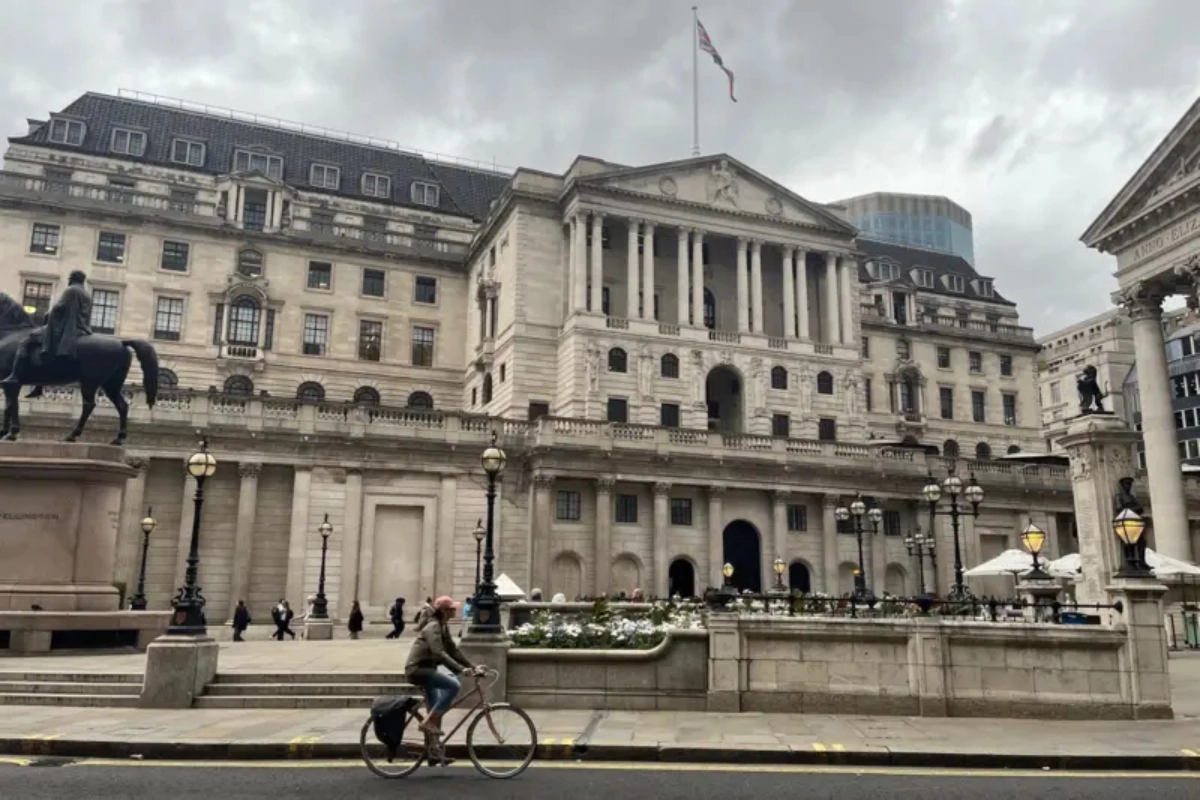

The resounding slam of the door echoes off the walls of the imposing columned entrance to the Bank of England.
Imposing mosaics and sculptures depicting lions, piles of gold, lightning bolts, and ancient Roman gods extend across the floor and walls.
“When this building was built, it was designed as a working bank. There were people coming in and out all day long,” explained Jenni Adam, curator of the Bank of England Museum.
“And they were immediately overwhelmed by this sense of grandeur, along with a lot of messaging about what’s happening on this site,” she said.
One hundred years ago, work began on the current bank building, a site that began as a townhouse in the 18th century and expanded over the centuries.
To mark the centenary, a new exhibition has opened at the bank’s museum, revealing more about what can be found inside one of Britain’s most secure buildings.
Ahead of the opening, the BBC had the chance to visit the building that handles some of the country’s key financial decisions and houses some 400,000 gold bars in its basement vaults, including some 31 tonnes that belong to Venezuela and have been the focus of a legal and diplomatic dispute between London and Caracas for years.
The Origins
The bank received its first Royal Charter in 1694, when it was founded “for the use and benefit of the public, to manage the national debt and maintain financial stability in Great Britain,” Adam said.
It proved to be a huge success, and by 1734, it had moved to its current location on Threadneedle Street in the City of London, the country’s financial center.
The premises grew larger, gradually occupying a 14,000 m² site within a windowless wall.
Several renowned architects worked on the bank, including John Soane in the 19th century,and its building was considered one of the jewels of the City, London's financial heart.
However, by the early decades of the 20th century, Soane's magnificent work was no longer fit for purpose.
“By the First World War, the bank's staff had fallen from around 1,200 in 1914 to around 4,000 in 1918, and it was clear there was a real capacity problem,” Adam explained.
“It was doing a colossal job managing an expensive national debt, among many different aspects, so it was decided to demolish it and rebuild,” he said.
Despite efforts to retain much of its historic character, the 14-year project proved controversial, with one architectural expert calling the demolition “the greatest architectural crime committed in London in the 20th century.”
A display of wealth
Upon completion in 1939, the project, led by architect Herbert Baker, cost a total of 5 million pounds (the equivalent of almost $388 million in today's dollars), with no expense spared in creating the country's central bank.
Evidence of such wealth can be seen throughout the complex, which rises seven stories high and has three basement levels.
On the ground floor, mosaics by acclaimed Russian artist Boris Anrep stretch along a maze of gray and black vaulted corridors, with figures and sculptures covering the fixtures and furnishings.
Gilded lions, a symbol of security, are spread throughout the space, from the specially designed lighting to the stair railings, while even the door handles are miniature recreations of Mercury, the Roman deity of communication and finance.
“There’s a real blend of modernity and antiquity. You get the feeling that, although this building is relatively new, it’s been here forever,” Adam said.
“There’s a long legacy, a long heritage. You can trust it, it’s going to live on,” he said.
Past, present and future
There are also hints of an even older legacy at the foot of a long spiral staircase, where a Roman mosaic discovered in the 1930s is on display.
With imposing banking halls, inspired by those in Soane’s building, hidden behind the corridor, the occasional echo of bangs and explosions is the main reminder of the building’s operational nature.
This activity also continues up another flight of stairs, but in a very different, almost regal atmosphere.
One space, the first-floor anteroom, is lined with red and gold silk,with centuries-old paintings hanging on the walls and an elaborately decorative fireplace next to a huge floor-to-ceiling window.
Ahead, thick wooden double doors lead into a luxurious, pale blue octagonal room, where the portrait of a former governor glows above a reproduction of a room created in the 1780s.
Without the microphones positioned around a curved table and two television screens, few would believe that meetings affecting millions of people are held here every month.
This is where, to this day, the bank's monetary policy committee meets to make decisions on interest rates, as part of its responsibility to control inflation.
“That's why it's important to have double doors to ensure no one overhears these important and market-sensitive conversations,” Adam said.
The atmosphere of a grand old building with modern touches permeates the entire floor, with many of the elements of stone from the old fireplaces and columns, similar to those of a bank, reused by Baker.
Through another set of double doors leads to the courtroom, where a trademarked lectern stands in front of an 18th-century fireplace, beneath an elaborate green ceiling and gold-clad walls.
Silhouettes of monarchs from all eras of the bank adorn the room, while golden griffins protect mounds of gold above the doors.
A weather vane also swings mechanically on one wall, recalling a time when the Port of London was practically on the bank’s doorstep and was a key part of the City’s economy.
“There’s a lot of symbolism of money and finance throughout the space… and gilt as far as the eye can see,” Adam added.
Maximum security
The need for tight security means that visitors to the building are extremely rare. The only thing you can see of the gold are the two ingots kept in the museum, which are owned by the bank itself.
That's why Adam said she was so happy to be able to present an exhibition to "discover the architecture" and give people an idea of ????what's inside the building.
"I've been working at the bank for 15 years and, when you come here every day, it becomes something normal," she acknowledged.
"However, every now and then you walk around and think: 'This is spectacular,' and there are so many stories and details to share," she concluded.
The Bank of England keeps 400,000 gold ingots in its underground vaults, which is equivalent to 310 tonnes and makes the institution the second largest custodian of the precious metal in the world,surpassed only by the Federal Reserve Bank of New York (United States), states its website.
The enormous amount of gold does not only belong to the United Kingdom. A fifth of the gold of the world's governments is held there and the reason is simple: London is the world center of trade in the precious metal.
Today, some 72 countries have some of their bullion in the tercentenary bank, assured StoneX Bullion, a firm specialized in the trade of this mineral. And among those countries is Venezuela.
Since 2008, the South American country has had around 31 tonnes of the mineral in the vaults of the Bank of England, which, for more than five years, have been the focus of a dispute between Caracas and London.
Since 2020, the Central Bank of Venezuela (BCV) and the government of Nicolas Maduro have tried to sell these ingots, under the excuse of acquiring food and medicine.
However, the British authorities have blocked these Venezuelan attempts under the excuse of international sanctions imposed on Caracas and doubts about the legitimacy of the Maduro government.