

Republicans approve project of provisional funding bill before the government shutdown
Mike Johnson managed to unite the majority of his party members in the House of Representatives to pass the provisional budget project
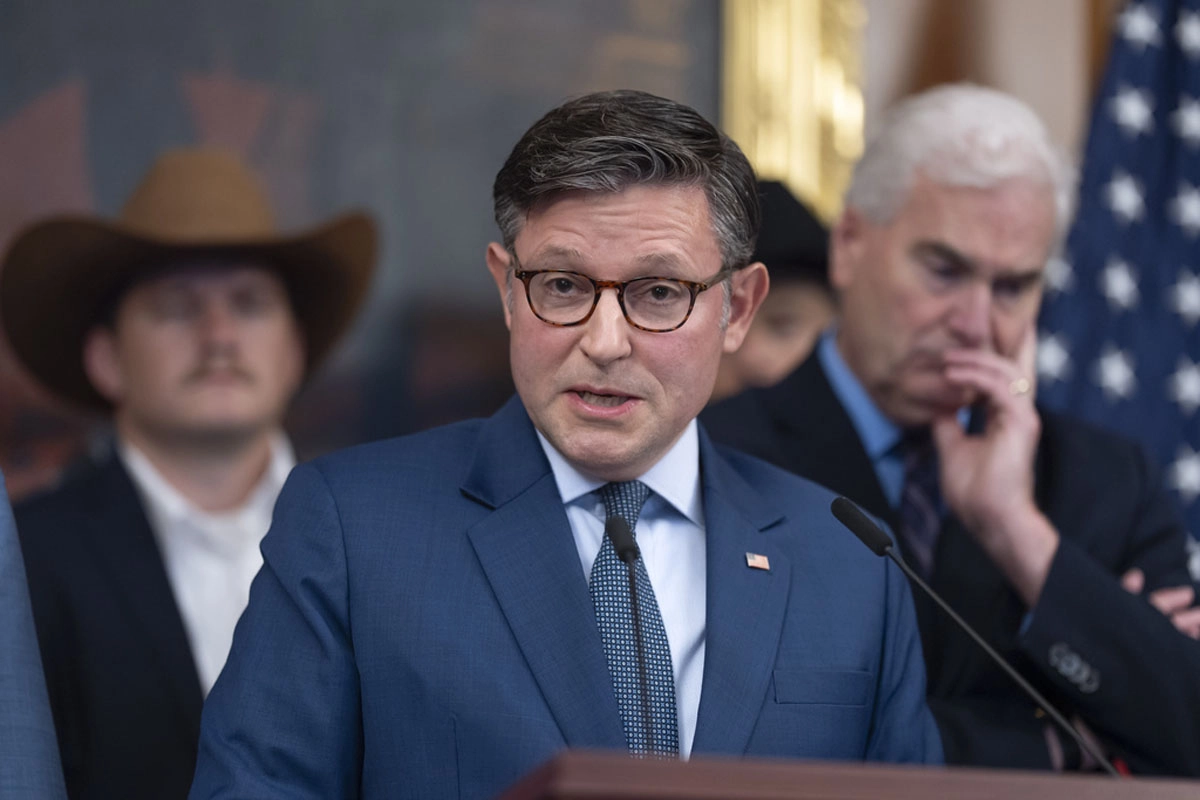

Mike Johnson, speaker of the House of Representatives, managed to get his colleagues to approve a plan to fund the government until November 21, while Congress struggles to avoid a government shutdown.
By a vote of 217 to 212, the provisional seven-month bill weeks known as a continuing resolution or CR, will now move to the Senate, where Democrats are expected to exert enormous pressure to give it the green light.
It is noteworthy that conservatives Thomas Massie, representative for Kentucky, and Victoria Spartz, for Indiana, voted against the bill; While Democrat Jared Golden, representative for Maine, gave his support to the Republicans.
In order to resolve the differences that exist between the House of Representatives and the Senate regarding three of the 12 regular funding bills, the creation of a committee has been proposed to analyze them separately and reach an agreement.
There are at least two points of disagreement between conservatives and Democrats.
The first of these arises from the so-called rescissions, a tool that allows the federal government to redistribute or retain funds previously approved by Congress for specific purposes.
On the other hand, there are the ObamaCare tax credits, created in 2010 and whose extension is set to expire at the end of the year.
In this sense, the Democrats demand to extend them at least until the midterm elections, but the Republicans refuse to allow it.
It should be noted that in the plan An additional $30 million is proposed for funding to reinforce the security of congressmen, as it contemplates allocating approximately $7,500 per week to them so they can spend it on hiring personnel to ensure their safety.
Fiscal year 2025 ends on September 30, and Congress risks a partial shutdown if the CR is not signed by the president.
Now, in the Senate, a threshold of 60 votes is required to advance the legislation.
The controversial issue is that there,conservatives have 53 seats and will need the support of at least seven Democrats, which seems difficult to obtain.