

It seems impossible: the car that disappears At night
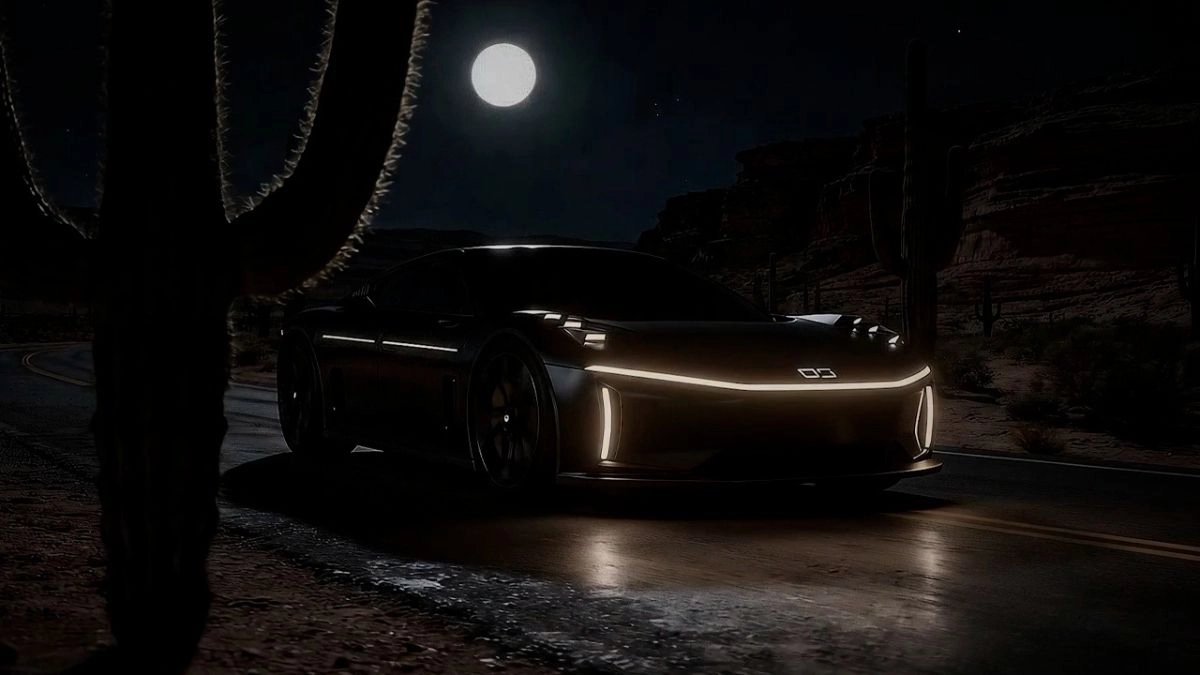
DarkSky presented a concept car that defies everything known: instead of emitting more light, it reduces its visual presence and uses intelligent lighting

The automotive industry has followed the same logic for decades: more light power in the dark.
Increasingly intense headlights, roads saturated with artificial light, and cities that shine even from space have become symbols of progress and safety. However, a new technological and scientific trend is beginning to question this seemingly untouchable equation.
From this critical perspective comes the DarkSky One, a concept car that proposes the exact opposite of what is expected. It doesn't seek to stand out at night, but rather to blend into it.
It doesn't aim to be visually imposing, but to reduce its light impact to the minimum necessary for safe driving. Its presentation not only introduces a new design, but also opens a profound debate about how we perceive visibility, visual comfort, and the nighttime environment. Behind this proposal is DarkSky International, an organization that has been studying the effects of light pollution on human health, road safety, and ecosystems for years. Its foray into automotive design is not aimed at the commercial market, but rather at rethinking concepts that seemed untouchable. A concept that breaks with automotive tradition. Unlike other futuristic prototypes loaded with screens, decorative LED lights, and aggressive light signatures, the DarkSky One adopts a radical stance: reducing the visual prominence of the vehicle itself. The central idea is simple but disruptive. According to DarkSky, current lighting systems often generate unwanted side effects such as eye strain, glare, loss of contrast, and poor adaptation of the human eye to darkness. Instead of solving these problems, they often exacerbate them.
The DarkSky One was conceived as a “night machine”,Designed from the ground up to operate in low-light conditions without disrupting the driver's or the surroundings' natural visual balance.
Technology that illuminates only where it matters
One of the vehicle's key technical features is its intelligent lighting system, comprised of two main technologies: LIDAR ADAPT and All Beam Adaptive Driving Light (ABADL).
Both systems work together to analyze the road in real time.
With this data, the headlights adjust their intensity, shape, and direction with extreme precision, avoiding projecting unnecessary light onto areas that do not provide useful information to the driver.
Unlike traditional headlights, which illuminate wide areas uniformly, this system concentrates light only on critical points of the road. This improves depth perception, reduces glare, and preserves the human eye's natural adaptation to darkness.
A body designed to be non-reflective
The DarkSky One's philosophy extends beyond the optical system. The vehicle itself was designed to be visually "silent."
Its bodywork uses a matte black paint with a micro-textured pattern called DS1, developed to absorb scattered light and minimize surface reflections. This finish significantly reduces glare from other headlights, streetlights, or road signs.
Furthermore, windows, panels, and exterior surfaces incorporate advanced polarization and reflection control principles.
The goal is to eliminate specular glare that often distracts the driver and creates visual confusion on long night journeys.
The result is a car whose silhouette seems to dissolve into the darkness, almost as if absorbed by its surroundings, allowing the nightscape to gradually reveal itself without excessive artificial interference.
The vision behind the project
For DarkSky International, the concept doesn't seek to glorify darkness as an absence, but rather to redefine it as a functional and valuable element of modern design.
Its CEO, Ruskin Hartley, explained it clearly: “DarkSky One illustrates darkness not as something to be eliminated, but as a design opportunity”; “better lighting doesn't mean more light, but lighting with precision, intelligence, and respect for the environment.”
This stance aligns with recent research on visual ergonomics,which show how human eyes perform better in environments with moderate contrasts and controlled light levels, especially during prolonged driving.
A prototype with cultural, not commercial, ambition
DarkSky One was not conceived to reach dealerships or to compete with current electric or sports models. Its objective is broader: to spark a global conversation about the impact of artificial lighting on modern mobility.
In a world where cities are increasingly brighter and nights increasingly shorter, this car raises an uncomfortable but necessary question: Are we lighting for safety or out of habit?
The prototype functions as a rolling laboratory that demonstrates that viable technical alternatives exist to reduce excessive glare without sacrificing visibility or protection.