

They denounce abuses in detainees who were transferred from Alligator Alcatraz to Miami
Added to the complaints about overcrowding are failures in the air conditioning in the middle of summer, and that detainees must drink water from metal sinks.
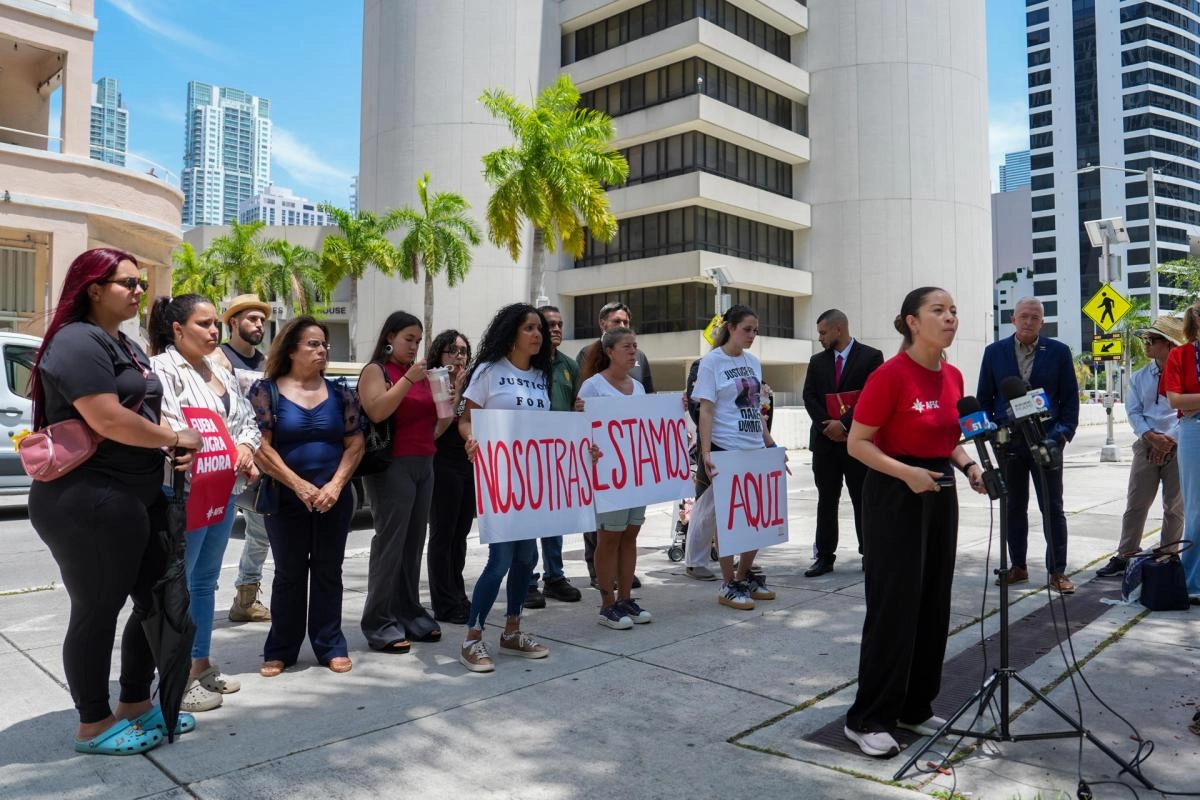

The closure of the immigration detention center known as Alligator Alcatraz, in the Florida Everglades, did not put an end to complaints about the detention conditions of hundreds of migrants. On the contrary, relatives and immigrant rights organizations assure that many of the detainees transferred to the Federal Detention Center (FDC), in downtown Miami, now face an equally or even more worrying panorama.
In front of the federal facilities, dozens of relatives demanded an independent investigation and an urgent inspection to verify the conditions in which the migrants remain. Protesters denounced overcrowding, high temperatures, problems with the water supply, lack of medical care and alleged retaliation against those who have reported abuses.
According to testimonies collected by community organizations, some cells with capacity for about 50 people house up to 97 detainees, while several inmates have been forced to drink water from sinks due to temporary failures in the supply system.
Organizations claim that the closure only changed the place of detention
The protest was called by The Workers Circle, a group that held vigils in front of Alligator Alcatraz for almost a year to demand the closure of the immigration complex. Their representatives maintain that the closure of these facilities only transferred the problem to other detention centers in the country.
Alexandra Orellana, from the Florida Immigrant Coalition, assured that the migrants went “from one nightmare to another,” while activists from the American Friends Service Committee insisted that the reported conditions show structural problems in the immigration detention system.
Among the cases exposed is that of Marlon Cervelo Trujillo, detained after attending an appointment with immigration authorities. His wife, Judith Castellanos, said her husband remains in a high-security facility despite not facing criminal charges.
Another testimony corresponds to Annett Uset Dumont, who reported that her husband, Daikel Dumont Rodríguez, was sent to isolation after she spoke publicly about the conditions of the center in a local media outlet. According to his version, an official told him that the measure was because the detainee had “spoke to the news.”
Likewise, relatives of people with chronic illnesses expressed concern about the alleged lack of medications and specialized medical care within the center.
Authorities acknowledge failures, but reject permanent irregularities
The complaints coincide with a report broadcast by the Local 10 News channel, which obtained testimonies from relatives and a detainee who stated that for several days the building remained without air conditioning in the middle of the Florida summer.
In response, the Federal Bureau of Prisons reported that the center reported a breakdown in one of the cooling systems, but assured that the problem was repaired and that the air conditioning is currently working normally. The agency also confirmed that last week there was a water pressure problem, so bottled water was distributed while the problem was resolved.
Regarding complaints about cockroaches and unsanitary conditions, the agency avoided commenting on specific cases and pointed out that the facilities have a permanent pest control service. The permanent closure of Alligator Alcatraz was announced at the end of June by Governor Ron DeSantis and border czar Tom Homan, after a year of operation.
Although the complex was dismantled, civil organizations maintain that the controversy over immigration detention conditions continues and demand greater federal supervision to guarantee respect for human rights.