

Thune rules out use of military force in Greenland amid growing geopolitical debate
John Thune rules out any US military action to take Greenland, despite White House comments about its possible annexation
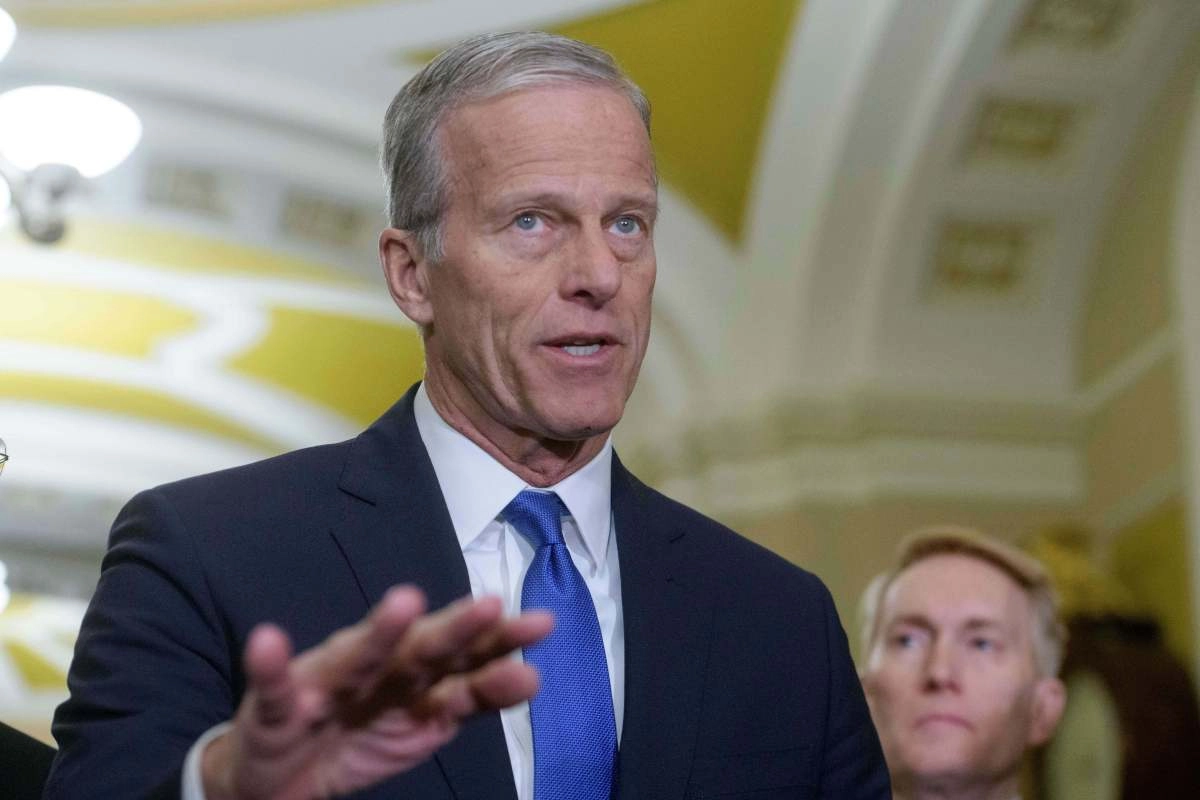

Amid a growing debate in Washington about the strategic future of the Arctic, US Senate Majority Leader John Thune on Tuesday rejected any scenario involving the use of military force to take control of Greenland, a key territory due to its natural resources and location Geopolitics.
The Republican senator's statements seek to cool the controversy generated after recent comments by a senior White House advisor, which reignited speculation about a possible US annexation of the island, administered by Denmark.
US Senate Majority Leader John Thune (R-South Dakota) ruled out on Tuesday any possibility of Washington resorting to military action to take control of Greenland, an autonomous territory under Danish sovereignty and considered strategic due to its mineral resources and its location in the Arctic.
Greenland Controversy
Thune's statements come after Stephen Miller, a senior White House advisor, stated that Greenland "should rightfully belong to the United States," generating concern and political debate both within and outside the country.
"I don't see military action as an option"
Thune was emphatic in rejecting any scenario of armed intervention in Greenland, even after the recent US operation in Venezuela that culminated in the capture of Nicolas Maduro. “I don’t see military action as an option there. It’s not something anyone is seriously considering,” the Republican senator asserted, downplaying the presidential advisor’s statements.
Direct Experience with Denmark and Greenland
The Republican leader recalled that last year he led a US congressional delegation to Denmark, where he held meetings with authorities in Copenhagen and directly addressed the issue of Greenland.
As he explained,Danish leaders are fully aware of the strategic interest the island holds, both for the United States and for other powers with a growing presence in the Arctic.
Openness to Economic and Strategic Agreements
Although he rejected a military takeover, Thune left the door open to diplomatic and trade agreements between the US administration, Denmark, and Greenlandic authorities. The senator noted that expanding the US business and strategic presence in Greenland could benefit all parties, especially on issues related to national security, critical minerals, and Arctic stability.
Stephen Miller's Statements
Thune's words contrast with recent statements by Stephen Miller, who asserted that Greenland should be integrated into the United States and suggested that no country would militarily challenge Washington in the event of an occupation. Miller maintained that there would be no need to discuss a military operation, arguing that no one would oppose US power in the region.
Lindsey Graham also rules out intervention
Senator Lindsey Graham (R-South Carolina), a close ally of President Donald Trump, also distanced himself from any military option and drew clear distinctions between the cases of Venezuela and Greenland. Graham agreed that the United States should strengthen its presence in Greenland to counter the influence of Russia and China in the Arctic, but stressed that this should be done through investment, cooperation, and legal agreements, not by force.
Greenland and the Arctic Geopolitical Chessboard
The renewed debate over Greenland reflects the growing strategic importance of the Arctic, a key region due to its shipping routes, natural resources, and military value. However, statements from key congressional leaders suggest that Washington is not considering a military annexation, opting instead for diplomacy and cooperation with its allies.