

When will you receive the $1,000 from Trump Accounts?
Find out when the $1,000 will be deposited into Trump Accounts, who qualifies, and how to open one in 2026, since you should do it this tax season
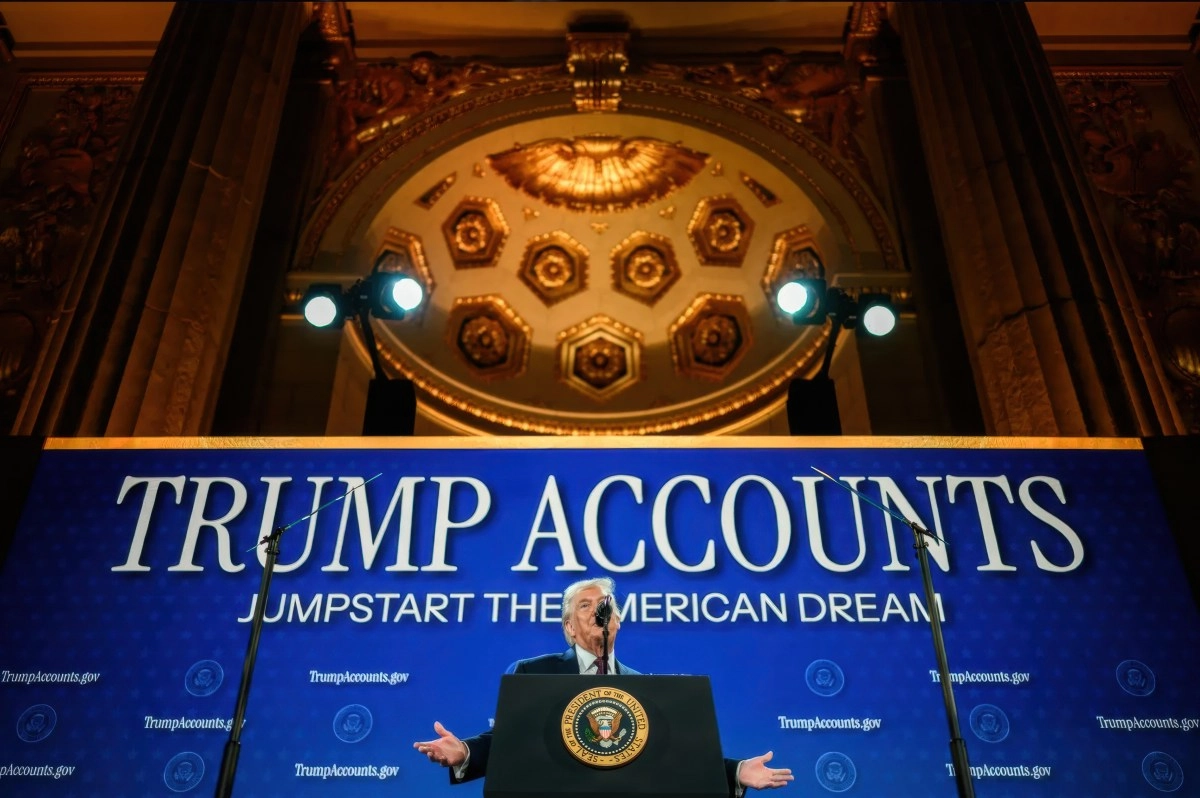

If you've heard about the new Trump Accounts and are wondering when the initial $1,000 deposit will arrive, you're not alone. We're sure many families with newborns are wondering the same thing. The federal savings program for children has generated a lot of excitement. Especially among parents seeking a financial advantage for their children from birth.
The initiative envisions a one-time deposit of $1,000 from the federal government for children born between 2025 and 2028. It works similarly to an individual retirement account, but designed for minors. And while the idea sounds simple, the timeline and requirements are key.
When will Trump Accounts be available?
Trump Accounts will officially begin on July 5, 2026. No contributions can be made before that date. However, the process to open them will begin weeks earlier.
The US Treasury Department will be responsible for creating and administering the accounts.
The associated financial custodian has not yet been announced.
When will the $1,000 be deposited?
The $1,000 seed money will be deposited after July 4, 2026. According to official Treasury guidance, the deposit will be made “as soon as possible” once the account has been authenticated.
That means it won't be automatic on launch day. You must first complete the registration and wait for confirmation.
How do I open a Trump Account?
Parents or legal guardians have two options. The simplest is to fill out Form 4547, Trump Account Election, online through the official website trumpaccounts.gov. The form will request your date of birth, Social Security number, and contact information. You can also file Form 4547 with your 2025 tax return with the Internal Revenue Service (IRS). The investment firm Vanguard recommends submitting the form as soon as possible. This way, the account will be ready when the program goes into effect.
Once the form is submitted, the IRS will set up the account. The partner financial institution will then contact you to complete the process.
Who owns the money?
The account legally belongs to the minor. However, it will be managed by an adult until the child turns 18.
Withdrawal rules are not yet fully clear. The IRS indicates that distributions could begin on January 1 of the year the minor turns 18. However, some experts have pointed out that this could be changed to allow withdrawals only after the child turns 18.
Afterward, the account will function like a traditional IRA.
This implies penalties if money is withdrawn before age 59.5, except for exceptions such as first home purchase, higher education, or medical expenses.
Who qualifies?
All US citizens born between 2025 and 2028 with a Social Security number are eligible to receive the $1,000.
Children born before 2025 and under 18 years of age may also open a Trump Account; However, they will not receive the initial government deposit.
Only one account per child is allowed.
How can the money be invested?
Investments will be limited to low-cost index funds. They must track indices composed primarily of US companies. At least 90% of the assets must be invested in US companies.
In addition, the fund cannot charge an expense ratio higher than 0.1%.
When the child turns 18, the account will convert to a regular IRA and will have greater investment flexibility.
Who can contribute and how much?
Contributions can come from parents, employers, governments, charities, or philanthropists. The annual limit is $5,000. The initial $1,000 contribution does not count toward that limit. Neither do contributions made by governments or charitable entities.
Companies such as JPMorgan Chase, Charles Schwab, BlackRock, Visa, Intel, and Bank of America have already announced contributions for employees' children.
In addition, philanthropists Michael Dell and Susan Dell pledged $6.25 billion. They will provide $250 to the first 25 million applicants under the age of 10 born before 2025 in zip codes with median incomes below $150,000.