

Why India's communists completely lost power after almost 70 years ruling millions of people
The story of the rise and fall of the communists in India: from power in the states to the struggle to remain relevant
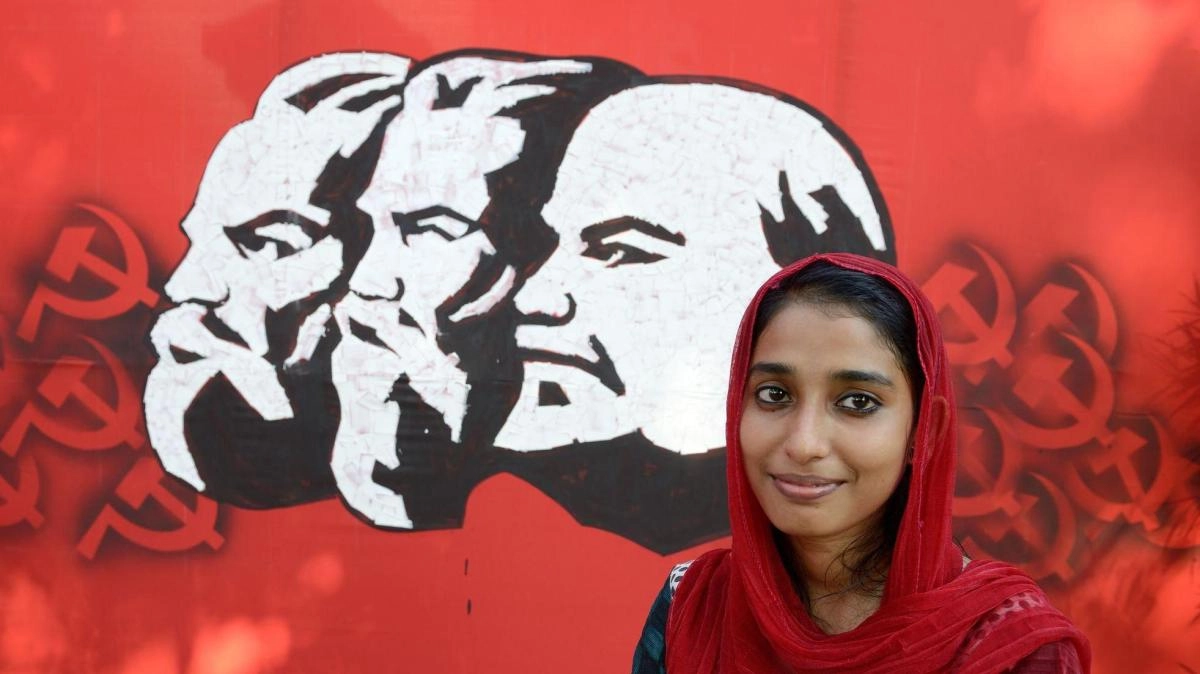

For the first time since 1957, India no longer has a single communist-led state government.
The defeat of the Communist Party of India (Marxist)-led Left Democratic Front (LDF) in Kerala this month, after a decade in power, marked the end, at least for now, of one of the world's longest-running experiments in democratic communism.
At their peak, India's communist parties ruled states stretching from West Bengal to Kerala and Tripura. They influenced the lives of more than 100 million people through unions, peasant organizations, student sections and disciplined cadre networks.
In West Bengal, the Left Front ruled continuously from 1977 to 2011, making it one of the longest elected communist governments in the world.
In Tripura, the Left ruled for 35 years in total, including an unbroken period of 25 years before its defeat by Prime Minister Narendra Modi's Bharatiya Janata Party (BJP) in 2018.
Kerala followed a different trajectory. Since 1957, when the state voted for one of the world's first democratically elected communist governments, led by EMS Namboodiripad, power has alternated between the Left and the Congress, making the communists an enduring force, but never a permanently dominant force.
In 1996, Jyoti Basu, a founding member of the CPI(M) and then chief minister of West Bengal, came close to becoming India's prime minister at the head of a coalition government. But his party rejected the offer, a decision Basu would later describe as a “historic mistake.”
The communists greatly influenced the coalition politics of Delhi.
In 2008 they withdrew their support from the government of former Prime Minister Manmohan Singh over the historic civil nuclear agreement with the United States. At the time, the left parties had 62 seats in the lower house of parliament, enough to force Singh to submit to a confidence vote before he finally reached the agreement.
His influence extended far beyond parliament.
Despite economic stagnation in West Bengal and concerns about declining educational standards under Left rule, the Communists continued to exert disproportionate influence over economic thought and intellectual and cultural life, far beyond their electoral strongholds.
Many believe that most of that influence has already faded.
“An atypical case”
The left survives today unevenly.
In Kerala, despite its latest setback, it continues to have political relevance. In the state of Tamil Nadu it survives mainly thanks to alliances. In Bihar, the CPI (Marxist-Leninist) has established itself as a dynamic popular force in some areas.
Left-wing student groups continue to enjoy good health in the main universities.
But in West Bengal and Tripura, once great bastions of Left power, the communists have become a shadow of their former selves.
Nationally, the CPI(M)'s vote share has fallen from more than 6% at its peak in the 1980s to less than 2% in the last general election.
This decline reflects the fading of an older political language: class struggle and collective mobilization have progressively given way to identity politics, nationalism, populist leaders, and welfare provision.
Mohammed Salim, secretary of the CPI(M) in West Bengal, senses a broader historical current at play.
According to him, since the 1990s, the rise of Hindu nationalism and market liberalization produced a “religious, political and economic offensive” that cornered the left from all sides.
“The middle class was shown a promising outlook,” he says. "Development, modernization, infrastructure: everyone would benefit. Ambition was generated."
Communists, he argues, had difficulty countering a politics increasingly organized around caste and religion, rather than social class.
“The politics of division weakened class unity,” says Salim.
However, experts argue that the Left cannot explain its decline simply through the rise of Hindu nationalism, caste politics and aspirational politics.
Unlike China or Vietnam, communist parties in India governed only states within a “federal political economy,” says Sanjay Ruparelia, a political science professor at Metropolitan University of Toronto.
That left them under increasing pressure to attract private investment and generate growth.
In West Bengal, contradiction erupted in spectacular fashion: the party that had risen thanks to land reforms was suddenly accused of dispossessing peasants of their land in the name of industry.
Kerala distinguished itself from the rest, attracting international attention for its decentralized planning, high social indicators, literacy level, poverty reduction and a strong public health system.
But the model had underlying problems.
“Kerala continued to depend heavily on remittances from abroad, which have fluctuated, leading to increasing fiscal pressures and insufficient job creation, especially among young people,” Ruparelia emphasizes.
The most surprising thing is that the Kerala communists themselves leaned towards the economic model that they had previously opposed.
A 2022 CPI(M) policy paper covered private investment, public-private partnerships, private universities and globally integrated technology services.
For political scientists like Ruparelia, that development highlighted a broader reality: India's communist parties were often better understood as social democrats than communists.
Rather than driving a revolution, they functioned primarily as parliamentary parties focused on social welfare, labor rights, and redistribution.
“India was an atypical case in having parties with a communist tradition that triumphed in democratic elections,” he declares.
However, argues CPI(M) general secretary MA Baby, state governments have always operated under strict constraints.
"They have limited financial and administrative powers. The real power lies in Delhi," he says.
“We use state governments to demonstrate that, even within the capitalist socioeconomic structure, it is possible to implement policies and alternatives in favor of the people, despite power limitations.”
But the social base that supported that model has been progressively eroded.
“Where are the communists?”
The organized labor movement has always been a minority in India's vast informal economy.
Social welfare policies increasingly shifted from class mobilization to direct cash transfers and identity-based coalitions.
When farmer protests against Prime Minister Narendra Modi's farm laws broke out in 2020, they highlighted how much rural politics had changed.
The left continued to be part of the movement – “the voice of conscience”, as analyst Shikha Mukherjee defines it – but it was no longer its leader. Regional parties and independent agricultural unions had taken that place.
"The left has lost its place as the leading voice for rights and guarantees. It has had difficulty adapting to the modern economy, and ideological confusion is now at the center of the movement," says Mukherjee.
Today's India is characterized by growing inequality, chronic youth unemployment and increasing economic insecurity; conditions under which Marxist politics might be expected to flourish.
As Ruparelia points out, “objective conditions, as leftists often say, should benefit them.”
But where are the communists? asks Mukherjee. "The left should have been in the streets. Where are they?"
This paradox is not unique to India.
Following the 2008 financial crisis, Europe also witnessed the emergence of new left-wing parties.
But many fought against nationalist populists who mobilized workers through “immigration policies and ethnonationalism rather than class solidarity,” Ruparelia says. Mukherjee argues that the Indian left has faced a similar challenge with the BJP.
Still, writing obituaries about political movements is premature.
“Our place in the hearts of the people”
Indian communism has survived splits, state repression and electoral collapses.
Their organizational networks, although weakened, still extend across various parts of the country.
Whether the left can transform this residual presence into political renewal is another question.
“The CPI(M) needs to reinvent itself: work within the economic system that liberalization has created, not simply oppose it,” says Mukherjee.
In West Bengal, Salim insists the party is “regrouping, repositioning and rejuvenating” again.
Aiming to shed its image as an aging party resistant to change, the party has been pushing a younger generation of leaders to the fore.
"Communists must constantly rejuvenate themselves. The only constant is change itself," says Baby.
But the magnitude of the left's decline remains alarming.
In the Bengal elections, the CPI(M) won just one seat in the 294-member assembly and secured just over 4% of the votes.
However, Kerala presents a different reality: even in defeat, the Left Democratic Front (LDF) retained approximately a third of the votes, demonstrating that the communists remain a major political force in the region.
In Tripura, the return to power still seems far away.
However, party leaders insist that the left's electoral decline does not fully reflect its social and political relevance.
"Do we have hope? Of course," says Baby.
"In fact, we ask ourselves: without us, what future is there? Seats matter, but our place in the hearts of the people matters even more."