

McLaren prepares SUVs and hybrids before electric cars
McLaren has renewed its management and with it its roadmap. Its new CEO, Nick Collins, has ruled out electric cars for now in favor of hybrids
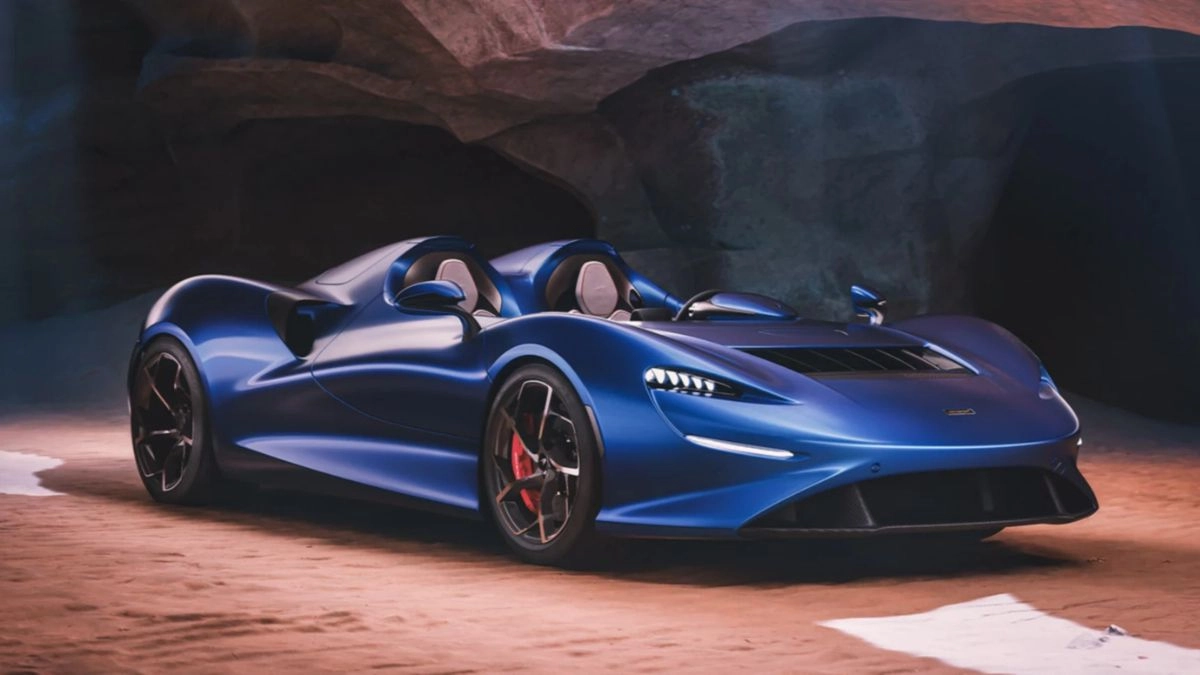

The automotive world is going through a period of profound transformation. While governments across the globe are pushing for electrification as the only path forward, some long-standing luxury and high-performance brands are resisting the immediate move.
One of the most prominent is McLaren, which under the leadership of its new CEO, Nick Collins, has charted a path away from full electrification to focus on hybrid technologies and the development of an SUV that could be a milestone for the company.
The decision is not entirely surprising given what's happening with its direct rivals. Ferrari is planning its first electric car for next year, but will do so as a controlled test before deciding whether to expand its range.
Lamborghini, for its part, has yet to give a specific date and is sticking with combustion and hybridization. McLaren, now with Collins at the helm, is following the same line of caution: electrification yes, but in due time and only in markets where it makes sense.
New leadership, new direction
The change at the top has been decisive. Collins, newly appointed to the helm, is tasked with stabilizing the company's finances and defining a sustainable path for McLaren.
One of the main strategic changes is to postpone any launch of an electric sports car, initially planned for 2027, in favor of a focus on plug-in hybrids.
The arrival of Saudi capital has been key. The participation of this investment group offers McLaren financial breathing room and room to maneuver, although it also means that part of the brand's future will be conditioned by the interests of these partners.
In statements to Car and Driver, Collins assured that the company's future rests on stability rather than uncontrolled expansion. According to the executive, The immediate objective is to recover a healthy sales pace and maintain the brand's exclusivity.
More limited production to increase value
One of the first concrete measures is a reduction in manufacturing volume. While McLaren produced around 3,000 units per year, the new plan will lower that figure to around 2,000. The logic behind this decision is to protect the residual value of each model and reinforce the idea of ??scarcity and exclusivity.
The adjustment not only has an economic impact, but also on the perception of the brand. In a market where overproduction can quickly depreciate vehicles, McLaren is seeking the opposite effect: fewer cars, greater value, and sustained long-term demand.
Collins is not only proposing changes in production. It is also betting on an aesthetic evolution. To this end, the British brand has closed an agreement with Forseven, a startup that will participate in the creation of a new design studio. The goal is clear: to more clearly differentiate McLaren models, as many currently share too many features.
This aesthetic shift could represent a turning point similar to what other luxury brands experienced when they introduced bolder visual languages ??to distinguish themselves within a saturated market. The intention is for each McLaren to have a unequivocal identity without losing the sporty DNA that characterizes the company.
The big bet: an SUV
The most ambitious step, and perhaps the most controversial, is McLaren's entry into the luxury SUV space. According to Collins, this project "will expand us beyond two-seater models."
While he didn't offer details about its appearance or engine, analysts expect a vehicle that competes in the same vein as the Ferrari Purosangue: a four-seater SUV with supercar performance.
This move responds to a market reality: SUVs dominate global sales, even in the luxury segment. Bentley, Lamborghini, and Rolls-Royce have already benefited from this phenomenon, and McLaren doesn't want to be left out. The challenge, however, will be ensuring that the model retains the philosophy of lightness and performance that defines the brand.
And electric models?
The big question is when the first 100% electric McLaren will arrive. Collins was clear on this point: "Combustion-powered cars will be our priority, along with plug-in hybrid variants."
That doesn't mean an outright rejection, but rather a postponement. He explained that the brand could develop an electric vehicle, but only if the market justifies it, paying special attention to regions like China, where demand for zero-emission vehicles is highest.
The CEO also emphasized that McLaren's philosophy cannot be sacrificed. For him, the key is to maintain lightness as a guiding principle. "I think that's how it has to be. It's not about weight per se, but what it releases in terms of the spirit of the car. You can use tricks to disguise it, but it's never as pure as a car that's already light to begin with."
This statement reflects McLaren's technical concerns: current batteries are still heavy, and an electric sports car that doesn't meet the brand's standards of agility and dynamism could be counterproductive.
The context of the sector
McLaren's decision does not come in a vacuum. The luxury electric car market is going through a testing time. While Tesla dominates volume, brands like Porsche and Audi have proven that there is demand for premium electric vehicles.
However, the transition is not without obstacles: battery costs, limited ranges, and charging infrastructure still generate doubts among demanding buyers.
In parallel, government regulations in Europe and the United States are pushing manufacturers towards electrification, but niche brands like McLaren have greater margins of maneuver due to their low production volumes.