

Nissan NX8: the new direct challenge to the Tesla Model Y
The model has ultra-fast charging, electric versions, extended range and advanced assisted driving systems
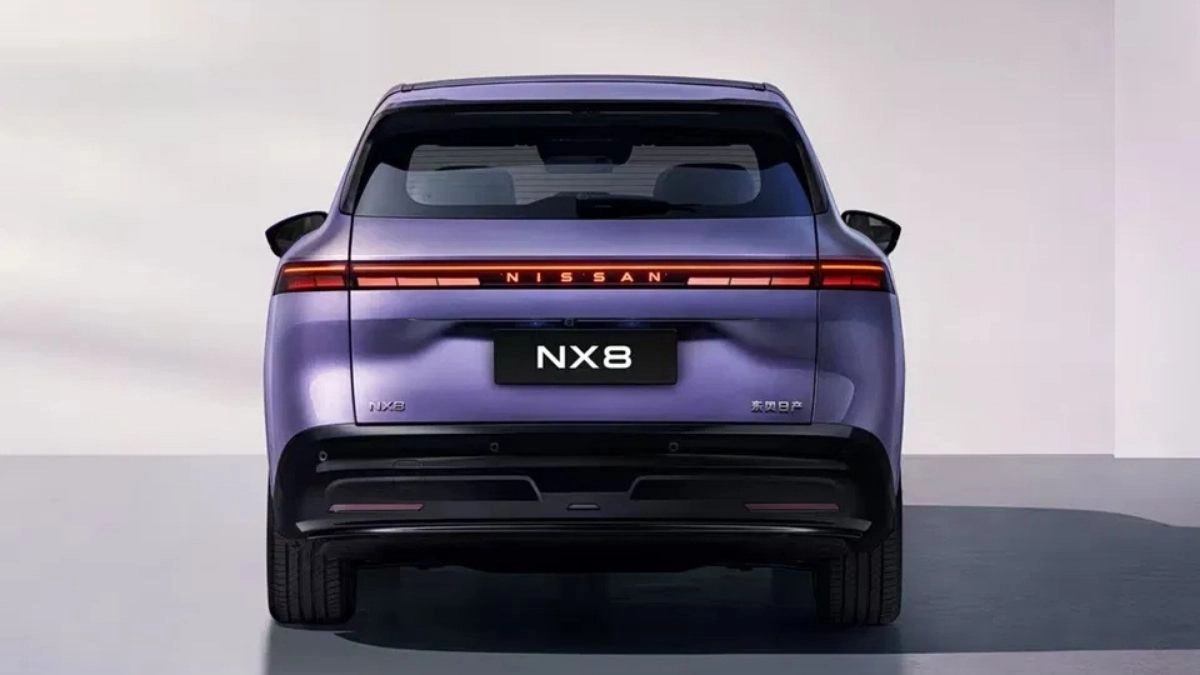

Assembly lines no longer work with mock-ups or experimental units. Nissan has begun manufacturing the first units of the NX8, a new electric SUV born with a clear mission: to compete head-to-head against the most influential model in the segment, the Tesla Model Y.
Read also: Apollo EVO: radical, exclusive, and brutally fast
The Japanese brand is betting on a technologically ambitious product, conceived from the ground up for the Chinese market, currently the world's largest laboratory for electric mobility.
You can read: How to know if your car's battery is no longer working
The NX8 is not simply an addition to the lineup. This represents a profound change in how Nissan envisions its future developments, relying on the Tianyan platform created with its partner Dongfeng and on top-tier local technology suppliers. The strategy aims to regain prominence in a market dominated by Chinese manufacturers and Tesla, where innovation is advancing at a speed rarely seen in the automotive industry. With this model, Nissan intends to demonstrate that it can still compete at the highest level of electric vehicles, not only in terms of design, but also in terms of electrical architecture, software, and charging solutions. A large SUV for a demanding market. The NX8 is positioned in the upper end of the mid-to-large segment. At 4.87 meters long with a wheelbase of 2,917 meters, it surpasses the X-Trail in size and is positioned as a spacious family vehicle, geared towards both comfort and long journeys. Its design features clean surfaces, taut lines, and aerodynamic details such as flush door handles. The objective is clear: to convey modernity and efficiency, two fundamental concepts for today's Chinese buyer. Inside, the design also breaks with the brand's traditional style. The dashboard is dominated by three large screens that house the instrument cluster, multimedia system, and vehicle functions. Everything is designed for a user accustomed to interacting with advanced digital interfaces.
Ultra-fast charging and two powertrain options
One of the NX8's strongest selling points is its electrical system.Nissan integrated an 800-volt architecture compatible with 5C charging technology developed in conjunction with CATL. In practical terms, this allows the battery to be recharged from 10% to 80% in about 12 minutes, a time that redefines the long-distance driving experience.
The fully electric versions reach a maximum power output of 335 horsepower (250 kW), enough to move a vehicle of this size with agility.
According to the CLTC homologation cycle, the range is between 580 and 650 kilometers, competitive figures within its category. Nissan will also offer EREV (extended-range electric) variants, which combine an electric motor with a 1.5-liter internal combustion engine for generating power. In this case, the combined power output is 261 horsepower. Depending on the LFP battery installed, the range in all-electric mode varies between 102 and 185 kilometers, while the total range exceeds 1,000 kilometers. Autonomous driving technology as a key feature. Another differentiating factor is the standard integration of a LiDAR sensor in the roof. This component is fundamental for advanced driver assistance systems, which will enable autonomous navigation functions on highways and in cities (NOA), as well as fully automated parking. With this equipment, the NX8 becomes the first mass-produced Nissan with this level of hardware, bringing it closer to what several Chinese startups specializing in smart mobility already offer. Sales are scheduled to begin in China in the first half of 2026. For now, Nissan has not confirmed exports to other markets, but the model's design makes it clear that it will serve as a conceptual and technological foundation for future electric SUVs with a global reach. Nissan will also offer EREV (extended-range electric) variants, which combine an electric motor with a 1.5-liter internal combustion engine for generating power. In this case, the combined power output is 261 horsepower. Depending on the LFP battery installed, the all-electric range varies between 102 and 185 kilometers, while the total range exceeds 1,000 kilometers. Autonomous driving technology as a key feature. Another differentiating factor is the standard integration of a LiDAR sensor in the roof. This component is fundamental for advanced driver assistance systems, which will enable autonomous navigation functions on highways and in cities (NOA), as well as fully automated parking. With this equipment, the NX8 becomes the first mass-produced Nissan with this level of hardware, bringing it closer to what several Chinese startups specializing in smart mobility already offer. Sales are scheduled to begin in China in the first half of 2026. For now, Nissan has not confirmed exports to other markets, but the model's design makes it clear that it will serve as a conceptual and technological foundation for future electric SUVs with a global reach. Nissan will also offer EREV (extended-range electric) variants,which combines an electric motor with a 1.5-liter internal combustion engine for generating power. In this case, the combined power output is 261 horsepower. Depending on the LFP battery installed, the all-electric range varies between 102 and 185 kilometers, while the total range exceeds 1,000 kilometers. Autonomous driving technology as a key feature. Another differentiating factor is the standard integration of a LiDAR sensor in the roof. This component is fundamental for advanced driver assistance systems, which will enable autonomous navigation functions on highways and in cities (NOA), as well as fully automated parking. With this equipment, the NX8 becomes the first mass-produced Nissan with this level of hardware, bringing it closer to what several Chinese startups specializing in smart mobility already offer. Sales are scheduled to begin in China in the first half of 2026. For now, Nissan has not confirmed exports to other markets, but the model's design makes it clear that it will serve as a conceptual and technological foundation for future electric SUVs with a global reach.