

Trump has long asked to use the army to quell protests and Los Angeles gave him a chance
Trump took advantage of the protests against ICE raids to take control of the California National Guard, which reports to the governor
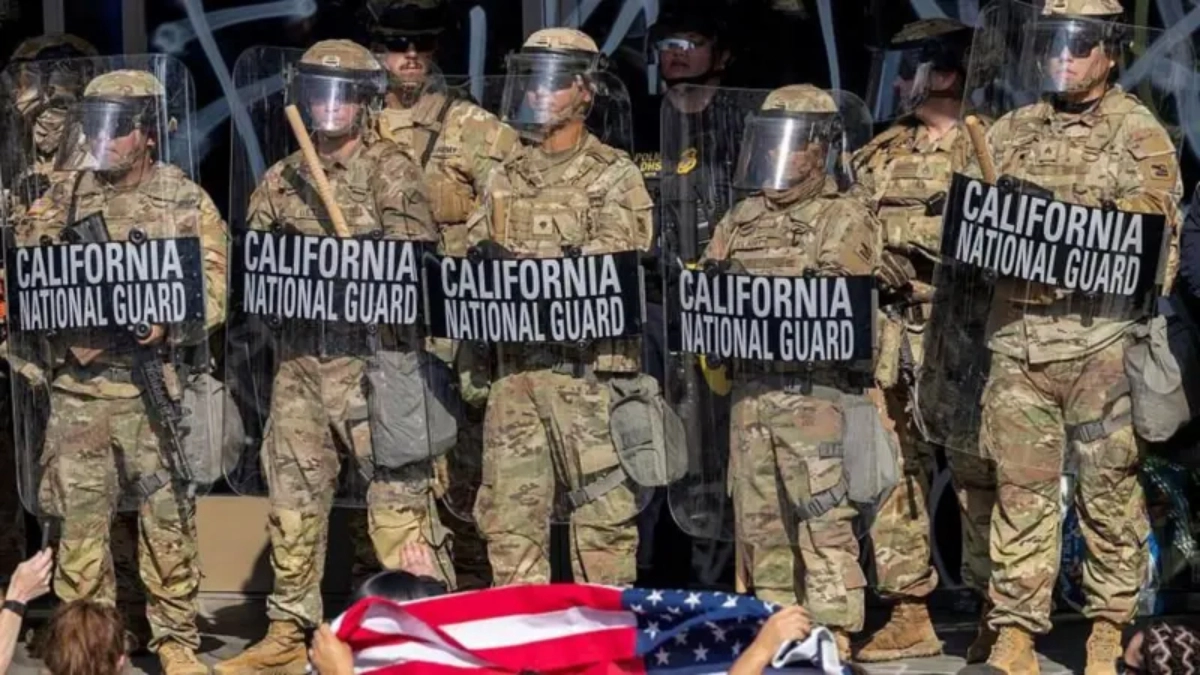

Donald Trump has long spoken of using military force to suppress protesters demonstrating against his policies and his presidency. This week, Los Angeles gave him the opportunity.
After some protests against federal immigration raids turned chaotic, Trump ignored the wishes of California Governor Gavin Newsom and activated the state’s National Guard.
This move, former military leaders told the BBC, was an escalation of Trump’s previous promises to use troops to quell protests and set a new precedent.
Coupled with Trump’s fondness for military image—he plans a military parade in Washington, DC, on Saturday to commemorate the 250th anniversary of the founding of the US military—the president’s intervention in Los Angeles has raised fears that he is “politicizing the military,” said retired US Army Major General Randy Manner.
“He immediately escalated the situation for purely political reasons. Those are not justifiable reasons,” said General Manner, who served as acting deputy commander from the National Guard Bureau.
However, the Trump administration maintains that it took control of the California National Guard to restore order and protect Immigration and Customs Enforcement (ICE) agents as they raided undocumented immigrants in Los Angeles.
ICE “has the right to safely and securely conduct operations in any state and jurisdiction across the country,” Defense Secretary Pete Hegseth told a congressional hearing Tuesday.
Trump also posted on social media that Newsom “failed to provide timely protection” to ICE agents.
“If our troops hadn’t gone into Los Angeles, it would be on fire right now,” the president wrote on TruthSocial Wednesday.
But Newsom, a Democrat and outspoken Trump critic,He maintained that the state could control the protesters on its own. He called Trump's intervention a "blatant abuse of power" that exacerbated an "explosive situation." On Thursday, a federal judge declared Trump's deployment unlawful and ordered him to return control of the Guard to Newsom. That order is on hold pending an appeal from the government.
Protests have continued for nearly a week, and Los Angeles police have made hundreds of arrests, mostly for refusing to disperse, but also for curfew violations in downtown Los Angeles, firearms possession, and assaulting a police officer.
Trump’s decision to strip Newsom of control of the National Guard goes beyond his past tough stances on protests, especially in Democratic-led states.
Following the 2020 death of George Floyd, which sparked nationwide demonstrations for police reform and racial justice, Trump called for a militarized response.
Trump criticized Floyd’s death in police custody in Minneapolis, Minnesota.
But as protests erupted, some descending into looting, Trump called on Democratic governors to be “much tougher,” warning: “The Federal Government will step in and do whatever is necessary, including utilizing the unlimited power of our Armed Forces and making numerous arrests.”
When protesters then marched in Washington, D.C., Trump tweeted that if they had stormed the White House, they “would have been met with the most vicious dogs and most sinister weapons you have ever seen.”
During the protests in Washington, D.C., National Guard helicopters flew low overhead to disperse the crowd.
A subsequent investigation by the U.S. military concluded that the incident was an improper use of military medical aircraft, The Washington Post reported.
“What we’re seeing in Los Angeles is a perfect storm,” said John Acevedo, associate dean at Emory Law School, who studies free speech and protests in the United States.
“You have protesters, they’re violent. It’s an ideal situation for President Trump to use his goal of using troops against the protesters.”
The president has the power to federalize National Guard soldiers, and can do so when they are needed abroad or when states request additional assistance.
However, under normal circumstances at the national level, the request for assistance begins at the local level.
The governor can then activate the state Guard or request federal assistance from the president.
American presidents have not seized control of a state’s National Guard against a governor’s will since the civil rights era.
At that time, President Dwight Eisenhower intervened to facilitate racial integration at a school in Arkansas, and President Lyndon B. Johnson later requested troops in Alabama to protect protesters.
“Over the decades, we have developed statutes, regulations, and protocols that govern our handling of civil unrest for very sound reasons,” said retired Major General William Enyart, a former congressman who also led the Illinois National Guard from 2007 to 2011.
Trump chose to “ignore all of that hard-won experience,” General Enyart added.
He considers the president’s actions in Los Angeles “political theater” and refers to a small number of protesters who burned Waymo self-driving cars over the weekend.
“Trump is the master of reality TV. He thinks reality TV is an excellent model for television. What’s more exciting than watching a couple of self-driving cars burning in the street?” asks General Enyart.
Click here to read more stories from BBC News Mundo.
Subscribe here to our new newsletter to receive a selection of our best content of the week every Friday.
You can also follow us on YouTube, Instagram, TikTok, X, Facebook and on our new WhatsApp channel.
And remember that you can receive notifications in our app. Download the latest version and activate them.