

Why Trump promise to send more weapons to Ukraine supposes an important advance for Kyiv in its war with Russia
The president announced a new mechanism to send weapons to Ukraine through NATO allies without the US directly assuming the financing.
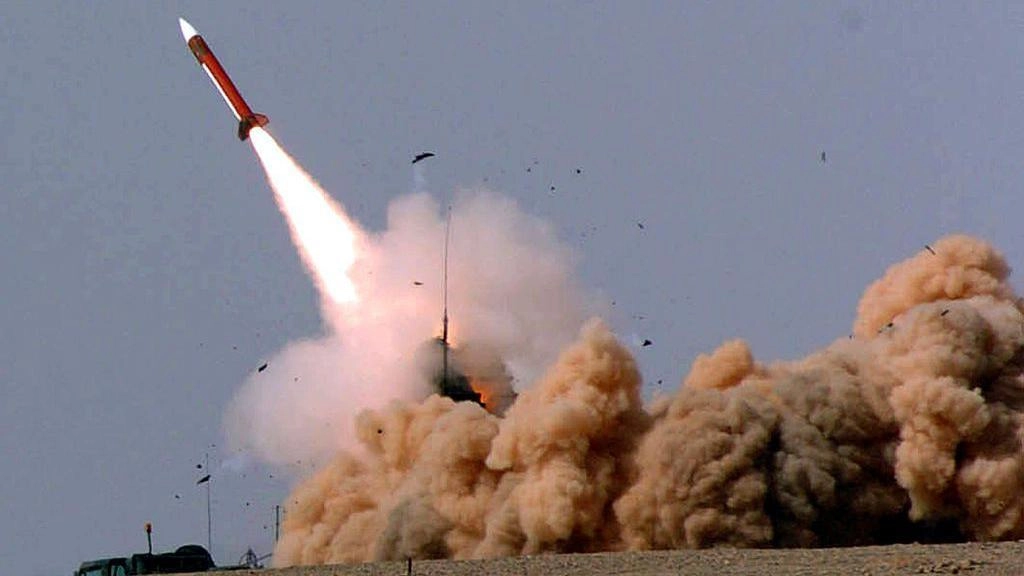

For the first time since his return to the White House, Donald Trump has promised new weapons for Ukraine.
According to a new agreement, the United States will sell weapons to NATO members who will then supply them to Kyiv to defend itself against the Russian invasion.
The president offered few details about what he described as “multi-billion dollars’ worth of military equipment.”
However, when asked if the deal included Patriot air defense batteries and interceptor missiles, he replied, “Everything.”
Trump said one European country has 17 Patriot systems and “a big chunk” would soon be on its way to Kyiv.
For Ukraine, a large country that currently has only a few batteries—an estimated eight—this represents a major development, giving it a chance to expand its protection against Russian ballistic and cruise missiles.
More Than Patriots
Seated next to the president in the Oval Office on Monday, NATO Secretary General Mark Rutte hinted that the package would be even bigger.
“It’s broader than Patriots,” he said.
He added, “This means that Ukraine will be able to access to a really massive amount of military equipment, both air defense and missiles, munitions…”.
The new agreement marks a significant step forward for Ukraine.
Less than two weeks ago, there was consternation in Kyiv when it was reported that the Pentagon had suspended military shipments to Ukraine, including Patriot systems.
The decision-making process following that announcement remains unclear, but on Monday, Trump again downplayed it, claiming that it was made knowing this deal was coming.
“We were pretty confident this was going to happen, so we paused for a little while,” the president explained.
Now, After arduous negotiations—many of them involving Rutte—the weapons will be able to continue flowing without Washington having to foot the bill.
“We’ve already put in a lot of money,” the president declared, “and we just don’t want to keep doing that.”
The agreement represents a personal triumph for Rutte, who has flattered and pleased the US president, among other things by helping to secure a commitment from all NATO members to spend 5% of their GDP on defense.
Rutte called the new pact “really important” and said it was “completely logical” for European NATO members to fund it.
Several countries, he noted, were already ready to participate, including the United Kingdom, Germany, Finland, Sweden, Norway, and the Netherlands.
“And this is just the first wave,” he concluded. “There will be more.”
Trump’s ultimatum to Putin
Separately, Trump threatened Moscow with a new deadline: If Vladimir Putin doesn’t agree to a ceasefire within the next 50 days, Russia and its trading partners will be hit with 100% secondary tariffs.
This is a new approach that Kyiv and members of the US Congress have long called for: pressuring Russia by sanctioning countries that continue to buy its oil and gas, such as China and India.
Trump’s move comes as the US Senate continues to work on a bill that would impose much tougher sanctions.
The president assessed that the Senate bill, which includes 500% secondary tariffs, “could be very good,” but added that “in the end it doesn’t mean much, because at some point it doesn’t matter anymore.”
As usual, the details of the president's threat remain somewhat vague.
But whatever happens in the coming weeks or months, Monday seemed to mark a turning point.
The US president finally appeared to have moved away from Vladimir Putin, although he did buy the Russian leader some time to sit down and negotiate.
This is definitely not a return to Joe Biden's promises to support Ukraine "as long as it takes," but it is also not the neutral stance that has so disappointed Ukraine and its Western allies.
Trump appears to have guaranteed that the crucial US arms supply to Ukraine will remain open for the time being, provided others fund it.
However, 50 days may seem like an eternity to Ukrainians, who continue to face almost daily nightly drone and missile attacks.