

Japan justifies security policy in the face of Chinese military expansion
The Japanese Defense Minister said that it is Beijing that possesses nuclear weapons and expands its armed forces “without sufficient transparency”
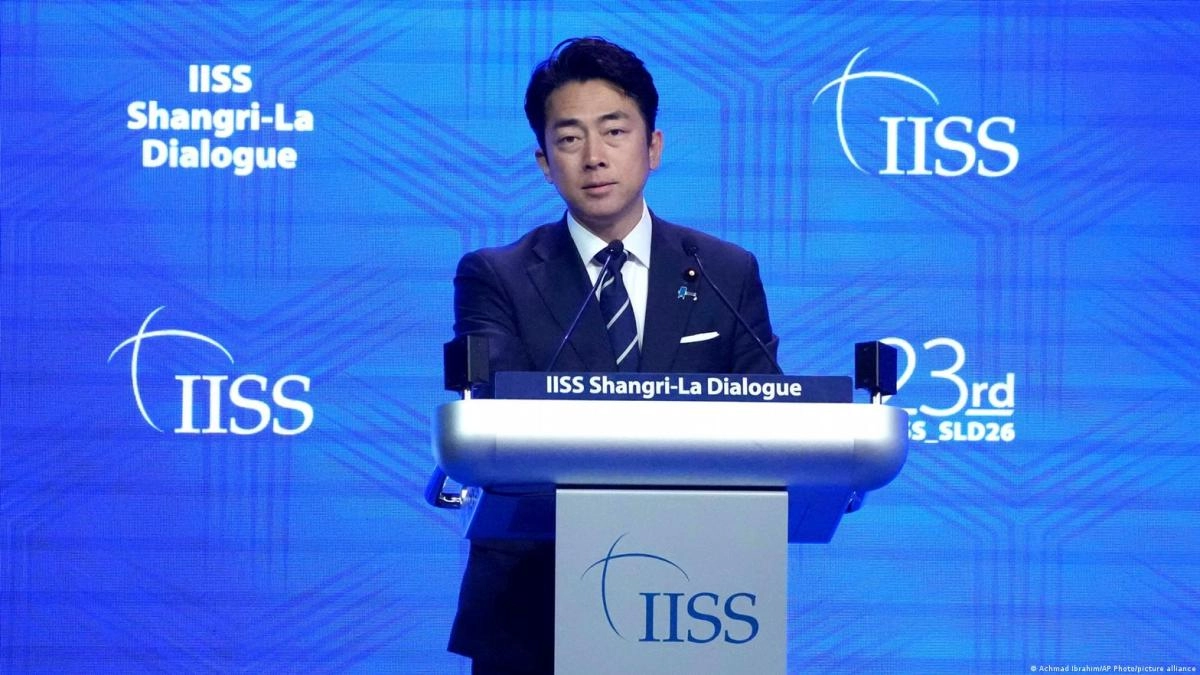

Japan's Defense Minister, Shinjiro Koizumi, justified this Sunday in Singapore the review of Tokyo's security strategy, which eliminates restrictions on the export of lethal military material for the first time since World War II, in parallel to what he described as a "rapid expansion" of China's military capabilities.
Japan has adopted a more proactive defense policy under Prime Minister Sanae Takaichi, leaving behind the pacifist perspective of recent decades. The shift has drawn frequent criticism from China, which accuses Tokyo of adopting a reckless “new militarism” that could destabilize the region. But Koizumi assured that “nothing could be further from the truth.”
“There is a country that has a huge arsenal of nuclear weapons and strategic bombers,” said the Japanese minister at the annual Shangri-La defense forum in Singapore. "Japan does not possess any of these weapons. And yet, Japan is accused of 'new militarism'. Isn't it strange?" he questioned, without directly citing China.
China is believed to possess hundreds of nuclear warheads and has heavily shored up its military in recent years.
Lack of transparency
“The goal is to ensure that each country has the capabilities it needs and that they are available when needed,” Koizumi said, highlighting that “Japan's defense policy does not identify any specific country as a threat nor does it seek military confrontation.”
However, he noted that Beijing "continues to increase its defense spending at a high rate and rapidly expand its military capabilities without sufficient transparency," which constitutes a "cause of concern for Japan and the international community," he warned.
Until now, Japan could only export defense products intended for rescue, transportation, warning, surveillance and demining. From now on, it will be able to sell any military product, including missiles or warships, subject to government approval.
The new regulations, which also seek to boost the national defense industry, include a clause that leaves the door open to exporting weapons to countries in conflict if the authorities consider that “special circumstances” exist.
Koizumi avoided answering a question from the audience about whether Japan would be willing to transfer weapons to Taiwan, a democratic country that China considers part of its territory.
The Taiwanese issue – very present in the forum – has been one of the main frictions between Japan and China in recent months, especially after Sanae Takaichi slipped that Tokyo could intervene if Taiwan is attacked.