

Julio Cesar Cu, the only black water diver in the world works in Mexico
Julio Cesar Cu, the Mexican diver enters black water to prevent flooding and protect thousands during the rainy season
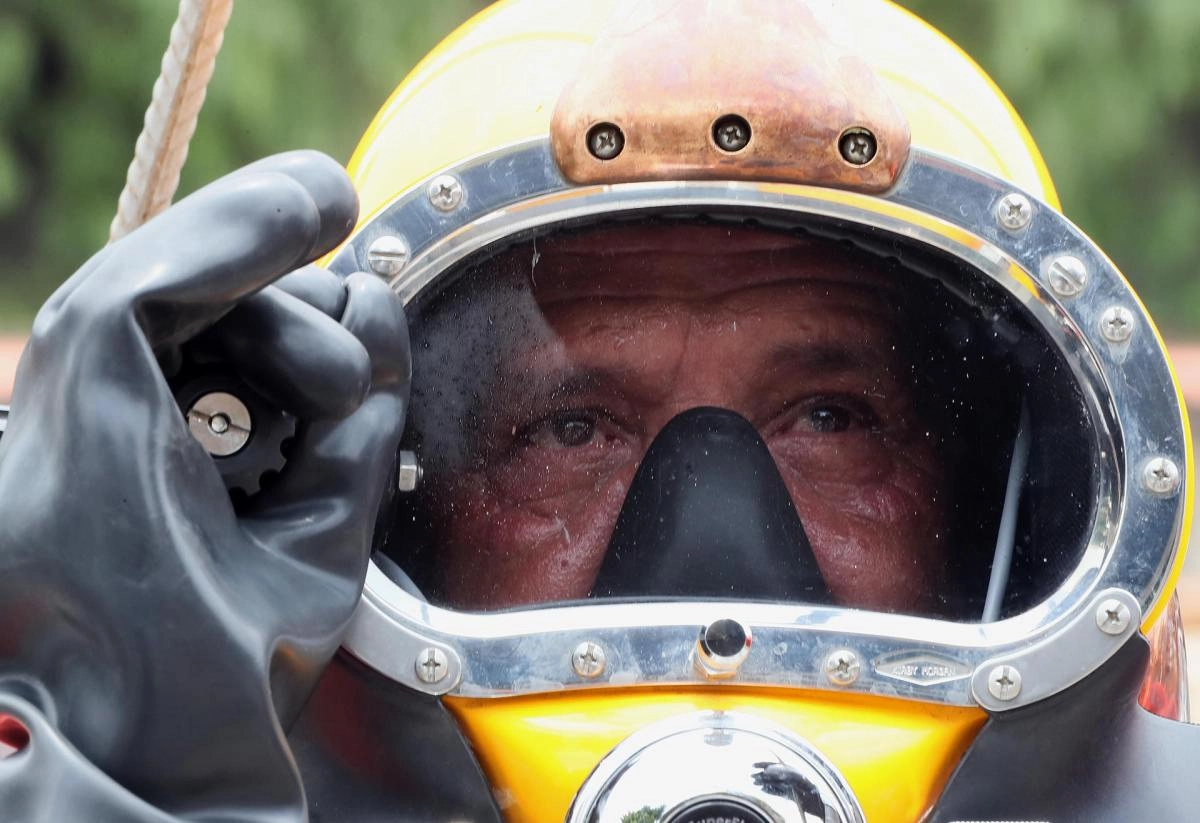

The intense rains recorded during the summer months in Mexico City caused floods that collapsed several drainage systems, due to the amount of precipitation and garbage that leaked into the sewer system of the Mexican capital, a problem that Julio Cesar Cu, the only black water diver in the world, combats.
Cu, who He has been doing this job for 42 years, a job he only expected to do for “three months.” He explains to EFE that his work, based solely on touch and communication with the surface, consists of maintaining grates, cleaning and installing the floodgates and pumps that get clogged with tires, logs, or appliances that are thrown away.
Julio Cesar Cu works “blindly”
“When I enter, at ten centimeters, I completely lose visibility and I work completely blind. Since we already know how the plants work, the pumps, and the places where the unloading and arrivals are, I do everything by touch,” the diver says.
The main reason for his work is due to the problems caused to the infrastructure by the garbage.
“My message is recurring (…) don't throw the garbage down the drain. Because at the end of the day I keep working, doing the most I can, but the amount of garbage that is thrown into the street wins us over,” He says.
He assures that this situation not only complicates his work, but also harms the community.
“That garbage that is thrown away, in the long run, is going to affect a flood,” he reiterates Cu.
Modus operandi
With 24/7 availability, Cu and his team, made up of Agustin and Jesus, those in charge of controlling the console and maintaining the material, work from their office waiting for a call to attend to an emergency or a scheduled job at a specific plant.
Once the work they must perform is known, once at the plant, Cu begins to equip himself with a hermetic one-piece suit that covers his entire body except for his hands, for which he uses gloves that gives him greater sensitivity.
While on his head he puts on a heavy diving suit equipped with headphones and a microphone that connects to a kind of “umbilical cord” through which he receives oxygen and the connections to be able to communicate with his team on the ground.
With his clothes on, he begins the descent from a crane or a ladder into the contaminated water where the garbage and dirt prevent any type of visibility.
Despite his “passion for work” and the personal satisfaction of knowing that his work directly benefits the city, Cu points out that there is a danger every time he dives into water contaminated by household, industrial and hospital waste.
Extremely risky work
“We run the risk that down below, because of the amount of nails, glass and wood there, they can tear our suit or hit us,” he says.
For this reason, he assures that when he works in a hilly area or where it's raining, he has to be very careful "so that the water doesn't hit us and hurt us. We also run the risk of our umbilical cord breaking or getting stuck."
At 64 years old and without anyone taking over this vital job, he would like to see more people dedicated to this work, although he recognizes that it's unpleasant and requires passion.
"I like my job. I'm passionate about it. I get excited every time I go out to work, it gives me satisfaction to get out of a dive and have done it (...). So, I think that more than anything it's love for the job," he says.