

Supreme Court rejects Trump's proposal to deploy National Guard in Illinois
Supreme Court blocks deployment of National Guard troops in Chicago area as part of his crackdown on immigration
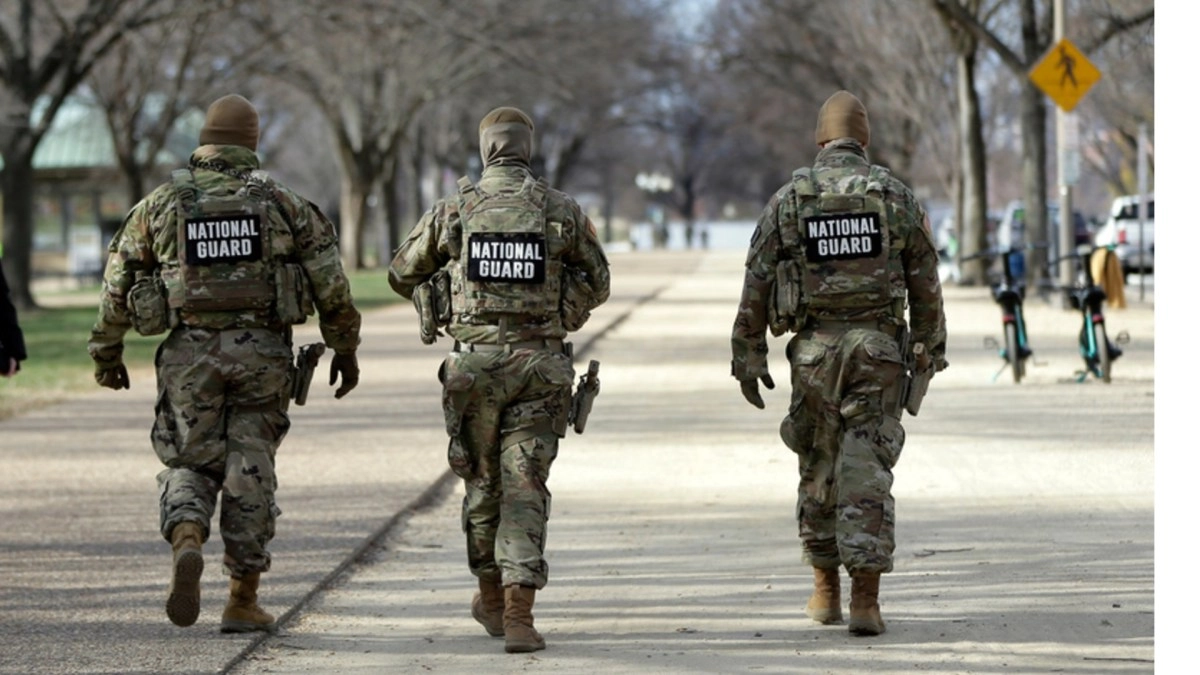

The Supreme Court on Tuesday rejected the Trump administration's plan to deploy National Guard troops in Illinois despite strong objections from local officials.
The court rejected an emergency request made by the administration, which said the troops are needed to protect federal agents involved in immigration enforcement in the Chicago area.
The The Supreme Court upheld a lower court's decision barring the government from deploying National Guard members to the streets of Chicago and its surrounding areas, despite the Trump administration's request to allow the extraordinary measure of deploying troops despite the objection of Illinois' Democratic governor, who argued that federal courts cannot challenge the president's decision to call up the National Guard for federal service. However, the Supreme Court rejected the administration's request to freeze that order in a decision that appears to be 6-3. Justices Clarence Thomas, Samuel Alito, and Neil Gorsuch dissented. In an unsigned order, the Supreme Court determined that "at least in this position," the Trump administration has failed to meet its burden of proving that Title 10, the law invoked by Trump, allows him to federalize the National Guard "in the exercise of inherent authority to protect federal personnel and property in Illinois." Federal Judge April Perry concluded that the Executive Branch did not present convincing evidence that there was a real threat of no insurrection in Illinois nor any indication that the demonstrations had significantly interfered with the immigration operations carried out by the administration. Perry had initially imposed a temporary suspension of the deployment for two weeks, but in October decided to extend the measure indefinitely while the case was reviewed by the Supreme Court, the AP reported. Although the decision is preliminary and only affects Chicago,It will likely reinforce similar challenges to those raised against National Guard deployments in other cities, and the opinion sets significant new limits on the president's ability to do so. The decision marked a rare defeat for President Donald Trump at the Supreme Court, which has a 6-3 conservative majority, after the administration secured a string of high-profile victories this year. Following the news, Lisa Gilbert, co-chair of Public Citizen and co-chair of the Not Above the Law Coalition, said, “The Trump regime has sought to deploy the National Guard across the country to intimidate citizens and facilitate the administration’s cruel and inhumane agenda of mass arrests,” highlighting the Supreme Court’s stance. “In case after case, governors and local law enforcement have actively opposed the deployment of the National Guard, emphasizing that there is no civil conflict that justifies such measures. The administration has presented factual arguments and extreme legal theories to justify the deployments, and courts around the world have ruled against the deployments.” “The country has ruled against it.”
“Today, a Supreme Court that is receptive to broad claims of executive power has decisively ruled that the National Guard deployments, at least to the extent they were justified in the Illinois case, are illegal and cannot proceed,” he asserted.