

Partial victory for Venezuelan immigrants with TPS
Three judges expose discrimination and racism in the cancellation of the program by DHS Secretary Kristi Noem
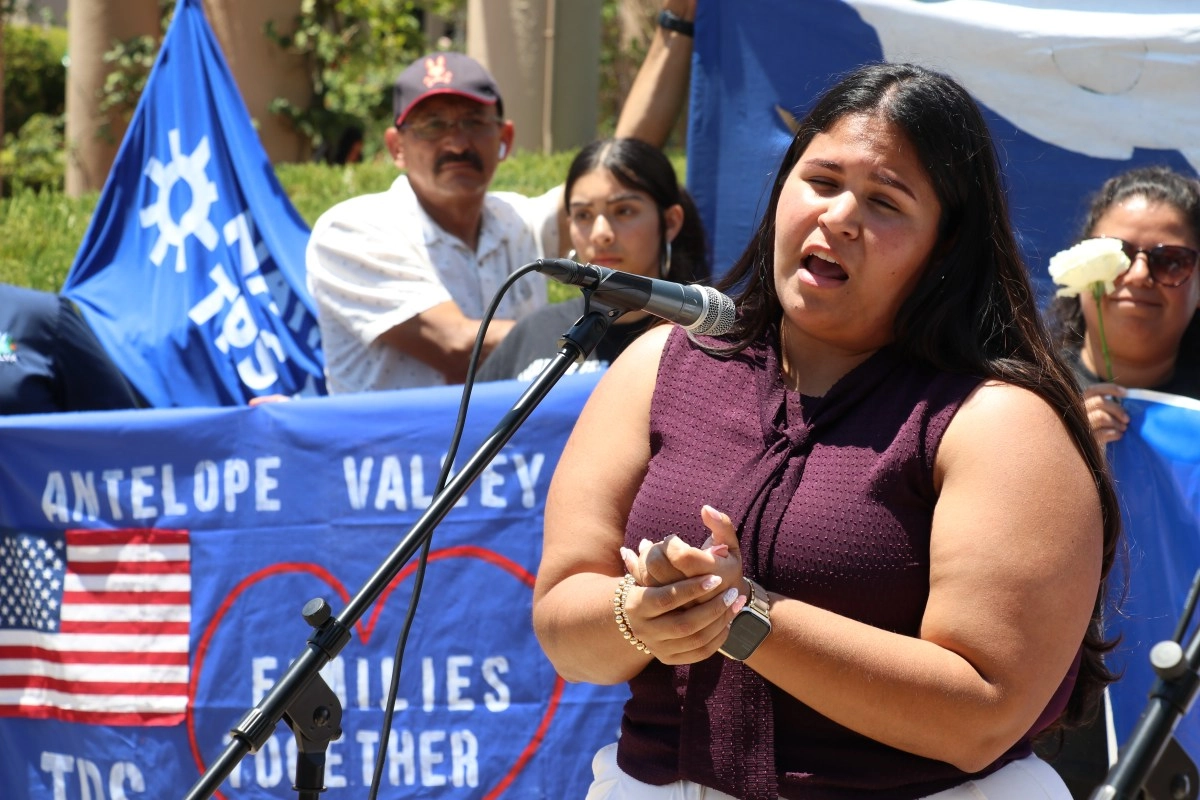

Lawyers representing thousands of Venezuelan beneficiaries of Temporary Protected Status (TPS) scored a partial victory against the appeal of the Donald Trump administration whose Secretary of Homeland Security (DHS), Kristi Noem decided to cancel the program without having the authority to revoke the protections granted by the administration of former President Joe Biden.
The three judges of the United States Court of Appeals for the Ninth Circuit, based in Pasadena, did not issue an immediate decision, which could occur in the coming weeks or months.
In addition, Secretary Kristi Noem does not have the authority to revoke TPS, since it is a humanitarian program designated by Congress.
The second reason is that the arguments given for the decision were paratextual [pretexts], based on racism against the Venezuelan community.
The final hearing of the lawsuit filed by the National TPS Alliance will be on August 1, where the court will hear arguments from both sides and consider the evidence.
Former President Joe Biden's administration first granted TPS to Venezuelans in 2021, citing high crime levels in Venezuela related to political and economic instability under President Nicolás Maduro.
However, in February 2025, the Secretary of Homeland Security under the Trump administration canceled the 2023 Temporary Protected Status (TPS) designation for approximately 350,000 Venezuelans. The previous 2021 TPS designation for Venezuela remains in effect until September 10, 2025.
“I feel optimistic,†Ahilan Arulantham, attorney on the case and co-director of the Center for Immigration Law and Policy at UCLA, told La Opinion regarding the reinstatement of TPS for Venezuela. “I hope [a decision] will lead to the protection not only of Venezuelans but of other countries.â€
Arulantham emphasized that the U.S. Constitution prohibits the government from acting out of racial animus.
"It's obvious to me that's what Secretary Noem is doing, because she says so. I found it very powerful to hear the judge quote him down to the last paragraph, and the government prosecutor try to somehow force him to explain what he was saying or the reason he was giving. And at the same time, I think they know that it's controversial to rule on the grounds of racism.†.
The decision that Venezuelan immigrant advocates are hoping for could have broader implications for other countries, particularly Haiti.
Indeed, on July 1, 2025, DHS through the United States Citizenship and Immigration Services (USCIS) published:. ““After reviewing conditions in the country and consulting with appropriate United States government agencies, Secretary of Homeland Security Kristi Noem has determined that conditions in Haiti no longer warrant designating it for Temporary Protected Status (TPS). Haiti's TPS designation and related benefits expire on September 2, 2025.
Cecilia Gonzalez, who left Venezuela with her parents in 2017, acknowledged that the judges' questions were "very strong" for both sides: the government and TPS advocates.
"The questions to our lawyers were answered with evidence that has been documented," she said. “We have always said that our case is very strong because the arguments are on our side, the evidence is on our side.†. He compared this litigation not to a 5K race but to a marathon. “If someone knows anything about running, they recognize that the winner is not necessarily the one who runs the fastest, but the one who finishes the race,†he said. †Therefore, he called on all Latinos to keep their heads high and not lose faith. †“It is very easy to lose peace of mind right now among so many ugly things that are happening,†he stressed, although he said he understood the vulnerable conditions of the people, “but the final goal is further ahead. Beyond winning this lawsuit, the ultimate goal is to achieve immigration solutions for Venezuela and the other 17 countries with TPS.
Jessica Bansal, an attorney with the National Day Laborer Organizing Network (NDLON), noted that while TPS is a program designed to provide stability to people by allowing them to know how long they will be able to remain in the United States, the court ruled that for the first time in the 35-year history of the Temporary Protection Program, an administration attempted to revoke protections already granted.
"That is illegal," she stressed.“The District Court also determined that the evidence suggests the Secretary's [Kristi Noem's] decision was motivated by racism and animosity toward Venezuelan TPS recipients, based on her own statements describing her decisions.†.
For her part, Venezuelan activist Adelys Ferros, executive director of the Venezuelan American Caucus, based in Miramar, Florida, recalled that, after being appointed DHS Secretary, Kristi Noem called all Venezuelans “criminals and Tren de Aragua.†.
During the hearing at the United States Court of Appeals for the Ninth Circuit, one of the Trump administration's lawyers had to acknowledge that "There had been confusion" about those derogatory terms.
The activist pointed out that the problem of discrimination and racism is not exclusive to people protected by TPS.
"Right now, in this country, Latino, brown, and African-American immigrants are being persecuted and even hunted in a cruel, inhumane, unjust, and discriminatory way," she declared. "Because, in the end, what they want is to get as many of us out of this country as possible. It sounds harsh and is a very harsh phrase, but we are facing ethnic cleansing."
"Our message to President Trump is that we are not going to give up. "We are going to work and fight until we achieve victory," added Martha Arevalo, executive director of the Central American Resource Center (CARECEN) in Los Angeles. “We will fight until we have security for all and a permanent solution for the entire TEPES community.†.
On January 17, 2025, former Department of Homeland Security (DHS) Secretary Alejandro Mayorkas extended TPS for Venezuelans under the 2023 designation until October 2, 2026, and EADs [Employment Authorization Documents] were extended until April 2, 2026. However, on February 3, 2025, new DHS Secretary Kristi Noem rescinded the January 17, 2025, extension, thus ending TPS for the Venezuelans under the 2023 designation as of April 2, 2025.
On March 31, 2025, a U.S. district court judge enjoined Secretary Noem from terminating the 2023 TPS designation for Venezuela. On May 19, 2025, the U.S. Supreme Court granted DHS the ability to terminate TPS and its related employment benefits for Venezuelan nationals who received protection under the 2023 designation, pending action by the Ninth Circuit Court of Appeals on the merits of the case.