

The Trump Government’s Plan to exploit rare earth minerals in the USA and counteract China’s monopoly
The United States government will become the largest shareholder in the only rare earth mine in operation in that country
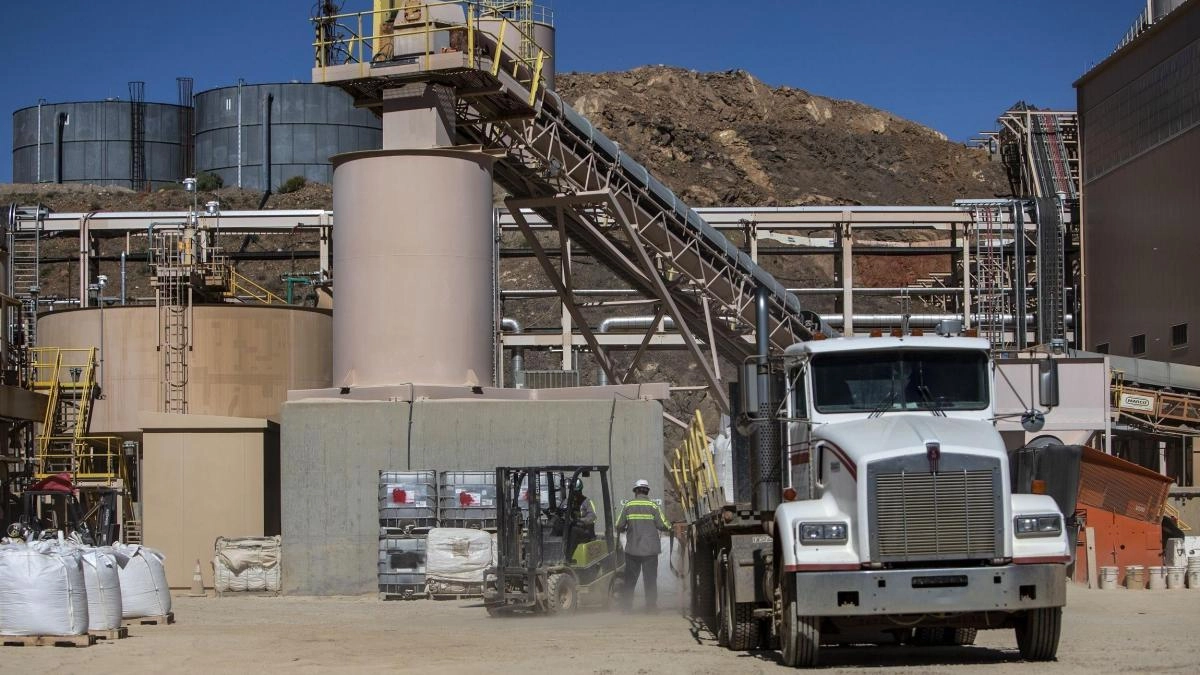

The United States government aims to become the largest shareholder in the only rare earth mine in operation in that country.
It will also take a number of additional steps to support the future of the Mountain Pass, California, operation.
Rare earth minerals are essential to a host of modern technologies, including electric cars and wind turbines.
Access to these metals is a central factor in the U.S.-China trade war, with Beijing controlling approximately 90% of global production capacity.
MP Materials, the owner of the Mountain Pass mine, has reached an agreement with the U.S. Department of Defense aimed at reducing U.S. dependence on rare earth imports.
The agreement stipulates that for the next 10 years, the U.S. government will commit to paying MP Materials the price minimum of $110 per kilogram on its neodymium and praseodymium production.
These are two of the most in-demand of the 17 different rare earth minerals key to the global economy because they are crucial in making permanent magnets, which are found in everything from smartphones to MRI scanners and electric motors.
The move comes amid concerns that China is leveraging its near-total control of the industry to drive down prices and force companies in other countries out of business.
China has nearly 70 percent of the world's rare earth mining and 90 percent of the refining capacity as a result of years of government support for the industry.
Under the new agreement, MP Materials will build a new facility in the U.S. to increase the amount of raw material from the mine that can be transformed into usable products.
The location is yet to be determined,but the company says it will serve both defense and commercial customers.
Much of this project will be funded by the Department of Defense, which will acquire $400 million in newly created assets.
"This initiative marks a decisive action by the Trump administration to accelerate American independence in the supply chain," said MP Materials founder and CEO James Litinsky.
U.S. mine with Chinese capital
Until now, Shenghe Resources, a company partly owned by the Chinese government, has been one of MP Materials' largest shareholders.
Shenghe has been the sole customer for the California mine's output, which meant its rare earths were shipped to China for refining.
Earlier this year, MP Materials announced it would stop doing that because of the massive 125% tariffs China imposed on U.S. goods in response to President Trump's 145% levies on Chinese imports.
The company added that the tariffs meant shipping its product to China was not commercially viable or in line with U.S. national interests.
That stance hasn't changed since the tariffs were rolled back.
Rare earths have been a major focus of efforts to repair the U.S.-China trade relationship, which has soured since Donald Trump returned to the White House.
An increase in tariffs prompted Beijing to impose a new export licensing regime that severely limited the amount of material reaching U.S. manufacturers.
A deal to improve that access, in exchange for lifting some of the U.S.'s own export restrictions imposed elsewhere, was the focus of trade talks in London and Geneva between the world's two largest economies.
Despite that commitment, the U.S. complained that it was not implemented quickly enough.
Longer term, domestic supplies offer the U.S. the best chance of increasing access to rare earths crucial to the manufacturing that is a key part of Trump's economic vision for his country.
China's export controls have also drawn criticism in Europe, with the vote A European Parliament resolution calling Beijing's policies "unjustified" and "coercive in intent." The resolution also urged the European Commission to speed up implementation of the Critical Raw Materials Act,which came into force last year with a view to reducing Europe's dependence on imports.
On a visit to Germany last week, China's Foreign Minister Wang Yi played down the issues, saying it was his country's "sovereign right" and "common practice" to control exported goods that have both commercial and military uses.
Click here to read more stories from BBC News.
Subscribe here to our new newsletter to receive a selection of our best content of the week every Friday.
You can also follow us on YouTube, Instagram, TikTok, X, Facebook and our new WhatsApp channel.
And remember you can receive notifications in our app. Download the latest version and activate them.