

How an innocent Norwegian weather rocket almost sparked a nuclear war
When a Norwegian rocket was launched on January 25, 1995 to study the Northern Lights, Russia thought it was a nuclear missile
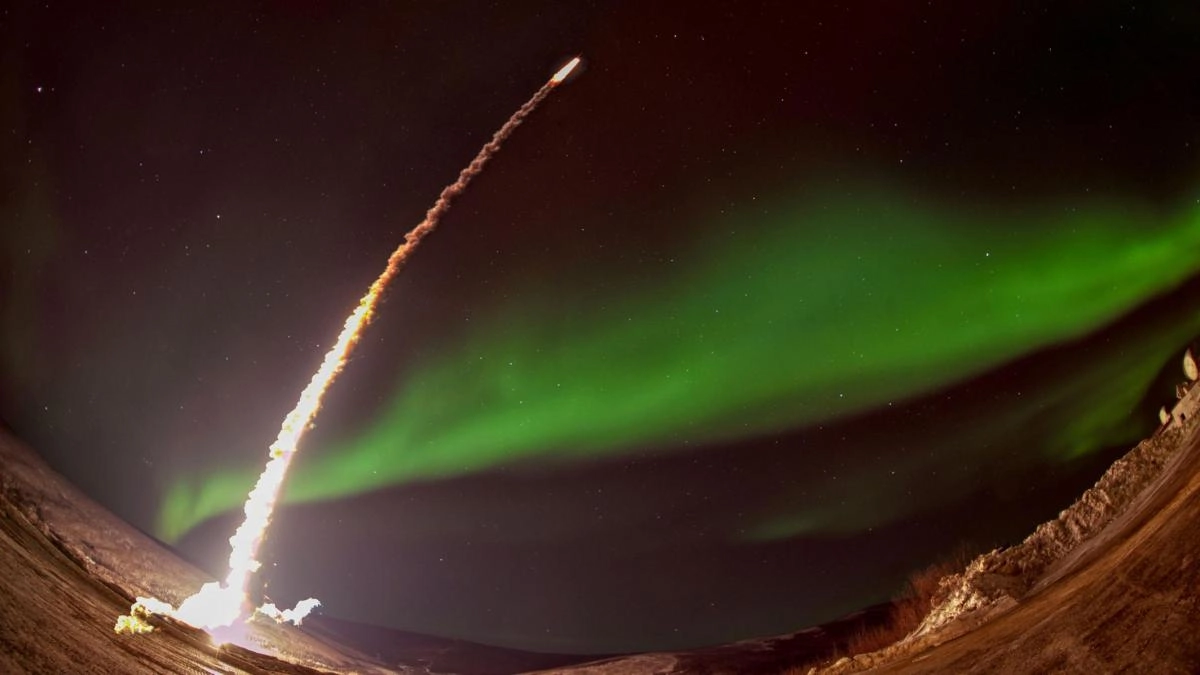

For just over an hour on a frigid winter day on January 25, 1995, the world had a chilling brush with the worst nightmares of the Cold War.
On an ordinary Wednesday afternoon, the technicians Military personnel on duty at radar stations in northern Russia detected a worrying signal on their screens. A rocket had been launched from somewhere off the Norwegian coast and was ascending rapidly. Where was it headed? Was it a threat? After all, many people assumed that this kind of nuclear tension had dissipated with the fall of the Berlin Wall. For those monitoring the skies, the implications were dire. They knew that a missile fired from a US submarine in those waters could deliver eight nuclear warheads to Moscow in 15 minutes. The message was urgently relayed through the chain of command to Russian President Boris Yeltsin. Yeltsin became the first world leader to activate a “nuclear briefcase,” a case containing the instructions and technology for detonating nuclear bombs. Since the end of World War II, nuclear-armed states have operated a policy of deterrence, based on the idea that if belligerent states launch large-scale nuclear attacks, it will lead to mutually assured destruction. At that tense moment, Yeltsin and his advisors had to urgently decide whether to retaliate. As we all know now, this alarming chain of events did not end in catastrophe. Despite the tension, the story ended up as a lighthearted topic at the end of that evening's newscast, accompanied by... Tom Lehrer's dark humor song “We Will All Go Together When We Go” (We will all go together when we go… all bathed in an incandescent glow).
Jeremy Paxman, presenter of the BBC's Newsnight programme, said: “Before we go, we must report that a nuclear war did not break out today, despite the efforts of a “Russian news agency. At 1:46 pm, Reports began to arrive citing the Moscow news agency Interfax, claiming that Russia had shot down a missile.” "Journalists, thinking they were about to witness Armageddon firsthand, immediately called the Ministry of Defense. A spokesperson, shaken but resolute, stated courageously: 'I am certain the British have not fired any missiles at Russia.''” A Pentagon spokesperson was unaware, stating, "All we have are reports of reports." Global currency markets reeled as politicians, military leaders, and journalists spent a frantic hour searching for information. At 2:52 pm GMT, those aware of the potential crisis could breathe a sigh of relief. Interfax corrected its report to indicate that, although the Russian early warning system had registered a missile launch, it had impacted Norwegian territory. Later, a defense official in Norway confirmed that the launch had taken place peacefully. It was part of a routine scientific research program at a civilian rocket launch site and its objective was to gather information about the unique meteorological phenomenon known as the aurora borealis. when West German teenager Mathias Rust managed to fly over 750 km through all of the Soviet air defense shields in a single-engine plane to land at the gates of the Kremlin. By then, the Cold War was over, but this was a sign that some Russian officials were still worried about a nuclear threat. “I was terrified to learn of the attention our routine launch received,” said Norwegian scientist Kolbjørn Adolfsen, who was in a meeting when the panicked phone calls started coming in. The strangest thing was that, weeks earlier, Norway had already informed Moscow about the planned launch.
Adolfsen suggested that the Russians might have reacted because it was the first time an aurora borealis rocket had risen to such a high ballistic trajectory, reaching an altitude of 1,457 kilometers.
However, he stated that it shouldn't have been a surprise.
“On December 14, a message was sent through the Ministry of Foreign Affairs to all the nations involved informing them that we would be carrying out the launch,” he stated. But for some reason, that warning never reached the relevant offices. It was a sobering reminder of how a single missed message could have potentially catastrophic consequences.
Since the dawn of the nuclear age, there have been more near misses than one would care to remember.
It's not just about major events like the Cuban Missile Crisis of 1962, which was probably the closest the Cold War came to all-out nuclear war between the US and the Soviet Union.
In 2020, BBC Future reported on how false alarms have been triggered by all sorts of factors, from swan migration and the Moon to computer glitches and space weather.
In 1958,an airplane accidentally dropped a nuclear bomb on a family's vegetable garden, thankfully only killing their chickens. In 1966, two US military plans crashed over a remote Spanish village; One of them was carrying four nuclear weapons.
In 2010, the US Air Force briefly lost contact with 50 missiles, preventing it from detecting or stopping an automatic launch.
Dangerous moment
At the time, many in Russia dismissed Yeltsin's announcement that he had used the nuclear briefcase for the first time, calling it bravado intended to divert attention from the war in Chechnya.
“In fact, yesterday I used my 'black' briefcase with the button I always carry with me for the first time,” he told the Interfax news agency the following day.
“Perhaps someone decided to test us, because the media constantly says that our army is weak,” he added.
Newsnight's report on the Norwegian missile scare may have been flippant, but opinions vary on the magnitude of the incident.
According to a former official of the CIA, it was “the most dangerous moment of the nuclear missile age.”
Military advisor Peter Pry wrote: “Never before had a leader of any nuclear power seriously opened their Russian equivalent of the 'nuclear briefcase,' in a situation where a real threat was perceived and where it was possible to make the immediate decision to unleash Armageddon.”
However, A nuclear disarmament researcher Pavel Podvig stated: “If I had to rank these cases… I would probably give it a three out of ten. There were far more serious incidents during the Cold War. even an irrational leader is alarmed by the firing of a missile. I think it is an empty alarm.”
Five days after the incident, BBC radio bulletins reported that Russia had attributed the alert to a “misunderstanding” that should not be repeated.
A spokesperson for the Foreign Office stated that the Norwegians had acted according to standard procedure and that there should be no ill will towards them.
Although disaster was warned, it is still alarming that a harmless weather rocket could cause such panic.