

Pennsylvania demands protection for immigrant children and families from Trump's threats
They have endured devastating circumstances since Donald Trump's mass deportation agenda began in January 2025
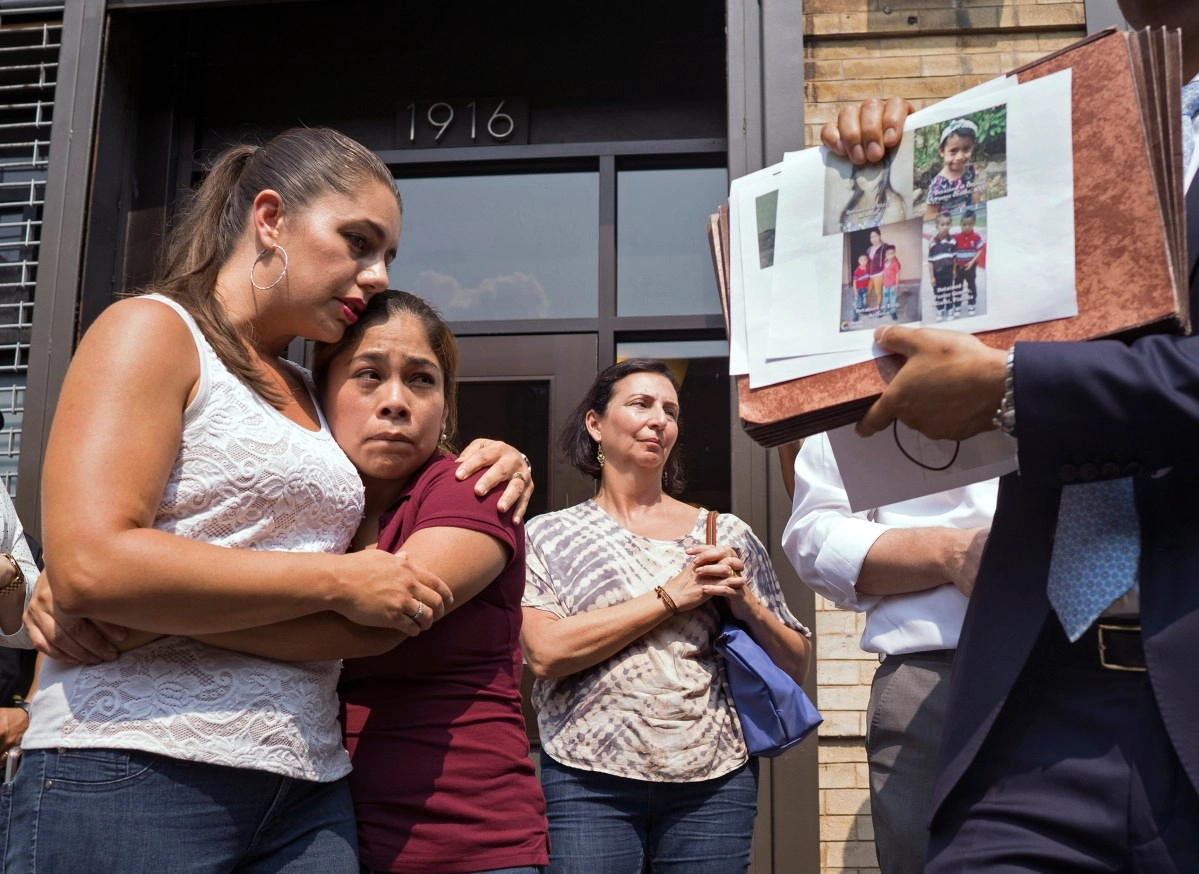

On Wednesday, December 3, 2025, health, education, and legal professionals from Pennsylvania participated in a press conference to share firsthand accounts of how the Trump administration's mass deportation agenda is harming immigrant children and families across the state.
Speakers detailed how Current policies are tearing families apart, ignoring basic safeguards, and putting children at risk. The conference was held following the administration's recent announcement that it will suspend all asylum decisions and some visas. The speakers detailed their experiences working with immigrant children and families, many of whom have endured devastating circumstances since Donald Trump's mass deportation agenda began in January with city-by-city deployments, fueling another family separation crisis. “Today I am here to share Luisa's story. Before the increase in ICE enforcement this year, Luisa was a very active fourth grader. She got good grades, played softball, and was adored by her teachers and classmates,” said Rachel Rutter, an immigration attorney and executive director of Project Freedom. “Then masked ICE agents became a common sight in her community, turning everyday activities into a fight for survival. Overnight, Luisa was ripped from her community and her school and deported to a country she hadn't visited since she was a child.” baby, a country he didn't even remember.
When children experience this type of chronic stress, it can disrupt their brain development and affect their immune, hormonal, and metabolic systems.
Furthermore, if a child is separated from their parents, this can lead to long-term, even lifelong, post-traumatic stress disorder, anxiety, depression, suicidal thoughts, and other behavioral problems.
“Parental separation is one of the most damaging adverse experiences we see in childhood,” said Dr. Katie McPeak, FAAP, a pediatrician with the American Academy of Pediatrics. “Here in Pittsburgh, the Latino population represents less than 3% of residents; however, we have seen an increase of more than 250% in ICE arrests compared to the same period last year,” said Monica Ruiz, Executive Director of Casa San Jose. “During one ICE raid that lasted five hours, ICE and local police stopped anyone who appeared to be brown while driving. As soon as someone couldn’t produce an ID, driver’s license, or proof of citizenship, ICE detained them. In one incident, children were left alone in a car after their father was taken away. And we know this isn’t just happening here, but also in other areas, even more rural ones, where no one is paying attention.” These raids affect families daily.”
Schools are deeply concerned about the emotional impact this is having on their students. Parents are afraid to send their children to school. Some are delaying medical appointments because they are no longer sure that clinics, community centers, or schools are safe, said Rosamaria Cristello, Executive Director of the Latino Community Center.
This fear continues to grow because the old guidelines that once kept immigration authorities away from schools, hospitals, churches, and other sensitive locations have weakened. Families used to trust that these were safe spaces where their children could learn and receive care without risk. That trust has eroded.
“The young people I work with are really lucky, in a way, because they have legal representation. “That representation makes all the difference for them,” said Orlando Portela, an immigration attorney with Jewish Family and Community Services (JFCS) in Pittsburgh. “Statistics show that 84% of young people without legal representation end up with deportation orders, meaning they are deported from the United States. But when they have legal representation, only 20% face deportation orders.” “If I could leave one message for our audience today, it would be that family separation is happening on a much larger and more devastating scale in 2025 than it was seven years ago, in 2017 and 2018, when separations at the border captured the nation’s attention,” said Jennifer Nagda, Program Director at the Young Center. “This administration is investing extraordinary resources to keep children in shelters, separated from their families, school, and community.”When children have no hope of reuniting with their families, when they have no hope of finding a lawyer, when they have no hope of moving freely within their community, they are more likely to give up. And when they give up, the government can return them without any safety assessment, without the intervention of a judge or court, without anyone considering their well-being.