

Las Vegas debuts Cybertruck patrols unique in the world
With ten fully equipped and modified units for tactical use, the department seeks operational efficiency in a single machine
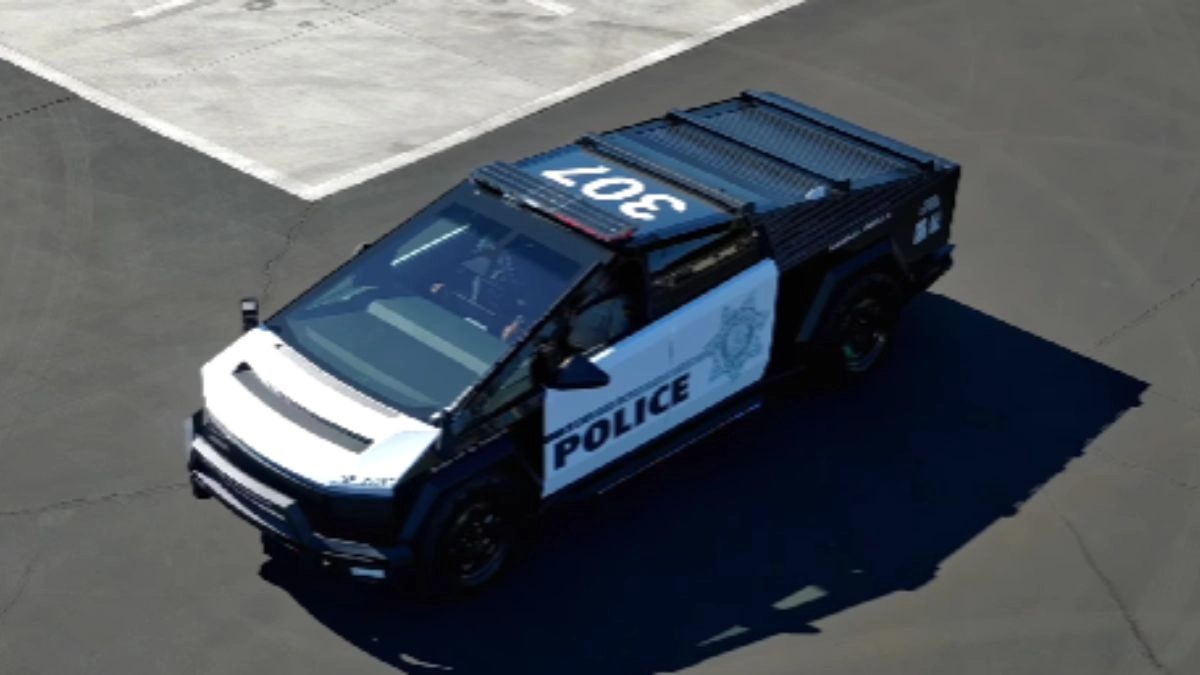

In the city where nothing seems impossible, Las Vegas is once again a pioneer. This time, it's not a new casino or a futuristic spectacle, but the debut of a police fleet that looks like it came straight out of a science fiction movie.
Also read: Camera failure forces Ford into a massive recall
The Las Vegas Metropolitan Police Department (LVMPD) unveiled its new patrol vehicles: ten Tesla Cybertrucks specially modified for police work.
You can read: Toyota revolutionizes its history with a 100% electric Corolla
The presentation took place at an official event led by Sheriff Kevin McMahill, who kicked off what he called "the beginning of a new era for public safety." The vehicles were transformed by UP.FIT, the specialized division of Unplugged Performance, a company that has gained recognition for customizing Tesla models for commercial and tactical purposes.
A Cybertruck Ready for Anything
At first glance, the new patrol vehicles maintain the imposing silhouette and angular design characteristic of the Cybertruck. However, beneath their stainless steel exterior lies a true police intervention platform.
Each unit is equipped with specific law enforcement equipment: emergency lights, sirens, integrated public address system, and security partitions for detainees. It also incorporates front protection bars, pursuit-grade brakes, reinforced suspension, and rock sliders, allowing it to withstand impacts and operate on difficult terrain.
Las Vegas, with its combination of dense urban environments and desert areas, was chosen as the ideal setting to test the versatility of the Cybertruck. “We wanted a vehicle that could patrol Fremont Street at night and then easily drive up to Red Rock Canyon the next day,” explained an LVMPD spokesperson during the launch.
An investment that pays for itself
Although its futuristic appearance generates both admiration and skepticism,The Cybertruck has a very tangible advantage: operational savings. According to department data, each unit can save up to $47,540 over five years compared to traditional internal combustion trucks. The calculation includes the difference in energy costs—with average prices of $3.78 per gallon of gasoline versus $0.21 per kilowatt-hour of electricity—as well as lower maintenance expenses. On average, each electric patrol vehicle generates annual savings of between $8,800 and $12,000 in fuel, plus $3,540 less in scheduled maintenance over the same period. The result: an extended lifespan of up to 150,000 miles and an operational longevity 1.5 times greater than traditional trucks. In a context where public budgets face constant pressure, the economics of the Cybertruck are hard to ignore.
A Donation That Made a Difference
Another striking element of this initiative is its financial origin. Unlike other public acquisitions, this fleet did not involve any expense for taxpayers. The ten units were donated by philanthropists Ben and Falicia Horowitz, who fully funded the project.
This public-private partnership allowed the LVMPD to introduce advanced technology without affecting its operating budget. During the handover ceremony, Sheriff McMahill emphasized that “these patrol vehicles are not an experiment; they are tools designed to protect our officers and the community.”
Furthermore, the impact of the project goes beyond patrolling. Since the fleet announcement, the department has reported an increase in applications for new officers. The Cybertruck, a symbol of innovation, has also become a powerful recruitment tool.
Beyond an Electric Car
The police Cybertruck is not just an electric vehicle with lights and a siren. Its integration with Las Vegas's technology strategy runs much deeper. These units work in conjunction with the "Remote Drone as a First Responder" program, a system that deploys autonomous drones in emergency situations before patrol cars arrive.
The combination of electric ground mobility and aerial reconnaissance creates a more agile and secure response ecosystem. This model of technological synergy represents a new operational paradigm for law enforcement.
On an environmental level, the benefits are also evident: each unit in service significantly reduces CO? emissions. Over its lifespan, a single electric patrol car can prevent the release of several tons of polluting gases, aligning with the city's sustainability goals.
Made in the USA, Built to Last
UP.FIT CEO Ben Schaffer highlighted a key aspect of the project: the high domestic content of the vehicles. “The police Cybertruck has approximately twice as many components manufactured in the United States as equivalent Ford or Chevrolet models,” he noted.
The units are assembled in Austin, Texas, and modified for police use in Hawthorne, California. This dual origin reinforces the “Made in USA” component and offers an advantage for departments that prioritize Buy American policies in their government procurement.
Beyond industrial patriotism, this detail also has practical implications: by relying less on imported components, maintenance and parts supply are faster and cheaper.
Although many doubted the Cybertruck's viability for police work, practical experience is dispelling those doubts.
Initial tests demonstrate that the pursuit-grade upgrades and reinforced suspension system allow for outstanding performance in pursuits and on difficult terrain. The units are already assigned to different area commands in Las Vegas, where their performance is being evaluated in both urban traffic and outlying areas. The project's motto, "Technology That Saves Lives," summarizes the philosophy behind this initiative: using advanced technology not only to innovate, but to better protect and respond faster.where its performance is evaluated both in urban traffic and in peripheral areas. The project's motto, "Technology That Saves Lives," summarizes the philosophy guiding this initiative: using advanced technology not only to innovate, but to better protect and respond faster.where its performance is evaluated both in urban traffic and in peripheral areas. The project's motto, "Technology That Saves Lives," summarizes the philosophy guiding this initiative: using advanced technology not only to innovate, but to better protect and respond faster.